

Can You Get an FHA Loan Twice? The Short Answer Is Yes
Can you get an FHA loan twice? Yes, you can. There is no lifetime limit on how many times you can use an FHA loan, and FHA financing is not reserved only for first time buyers. If you used an FHA loan to buy your first home, sold that home, paid off the loan, or refinanced into a different loan, you can apply for another FHA loan when you are ready to buy your next primary residence. The important rule is different from what many buyers expect. You can use FHA financing again and again over your lifetime, but you can generally hold only one FHA insured mortgage at a time. That distinction explains most of the confusion about repeat FHA use, and it also explains why some buyers are told no while others are approved without any problem. In this guide, we explain the one loan at a time rule, the four exceptions that allow two FHA loans at once, what it takes to qualify again, how much a second FHA loan costs in 2026, and the mistakes that can delay your next purchase.
Think of it this way. A buyer in Ohio used an FHA loan in 2019 to buy a $185,000 starter home with 3.5 percent down. She lived there for five years, built equity as prices rose, and sold the home in 2024 for $245,000. Her FHA loan was paid off from the sale proceeds at closing. In 2026, she wants to buy a $310,000 home closer to her family. She can apply for a new FHA loan for that purchase. Her earlier FHA loan does not count against her, and she does not face a waiting period simply because she used the program before. She will need to qualify again based on her current income, credit, debts, and down payment, but the fact that she already used FHA once is not a barrier.
There Is No Lifetime Limit on FHA Loans

HUD, the U.S. Department of Housing and Urban Development, does not set a maximum number of FHA loans a borrower can receive over a lifetime. Each application is judged on its own merits. Your lender will look at your current credit score, your current income and employment, your debt to income ratio, your documented down payment funds, and the home you want to buy. A borrower who used FHA in 2010 and wants another FHA loan in 2026 is treated in much the same way as a borrower who has never used the program. There is no penalty, no extra fee, and no higher down payment requirement simply because you are a repeat user. For current program details, see the official information at hud.gov and the home buying guidance at consumerfinance.gov.
This surprises many repeat buyers because FHA loans are often described as first time buyer loans. That description is misleading. FHA loans are popular with first time buyers because the down payment can be as low as 3.5 percent and the credit requirements are more flexible than many conventional loans, but the program itself is open to repeat buyers, move up buyers, and buyers who have owned several homes before. What matters is that the home will be your primary residence, that you meet the credit and income rules at the time you apply, and that you do not already hold another active FHA loan on a primary residence, unless one of the exceptions below applies.
The One FHA Loan at a Time Rule
The main restriction is that FHA will generally insure only one principal residence mortgage for a borrower at a time. The program was created to help people buy a home they will actually live in, not to help investors build a portfolio of rental homes with government backed financing. When you close on an FHA loan, you must move into the property within 60 days and intend to live there for at least one year. Your lender verifies this intent during underwriting, and misrepresenting your occupancy plans can be treated as mortgage fraud, so this is not a rule to work around with a wink and a promise.
Once that first year has passed, you are free to move out, sell the home, or in many cases convert it to a rental, subject to your loan terms and lender approval. But as long as that FHA mortgage remains active, you generally cannot take out a second FHA purchase loan for another primary residence. That is why the cleanest path to a second FHA loan is to remove the first one from the picture before you apply. You can do that by selling the home and paying off the loan at closing, by paying off the loan in full, or by refinancing the FHA loan into a conventional loan. Once the old FHA loan is gone, the one at a time question no longer applies, and your new purchase is underwritten under the normal rules.
It is also important to understand how a repeat purchase interacts with the rules in our earlier guide on how FHA loans work for repeat buyers. That article explains the same core point from the repeat buyer angle. You requalify from scratch, you pay mortgage insurance again on the new loan, and the new home must meet FHA property standards. Your history as a responsible FHA borrower can help you feel more confident, but it does not guarantee approval, and it does not let you skip the appraisal, the income check, or the down payment.
What Happens After You Sell or Pay Off Your First FHA Loan
Selling is the most common route. When you sell, the title company pays off your old FHA loan from the sale proceeds, and the lien is released. There is no FHA waiting period after a clean payoff. If you sold in March and find a new home in May, you can apply in May, provided your credit, income, and funds check out. Your sale proceeds can also help fund the new purchase, but only once the lender can document them. Keep your closing statement, your bank statements showing the deposit, and a clear paper trail if the money moves between accounts. Large, undocumented deposits are one of the most common causes of last minute delays for repeat buyers.
Refinancing is the second route, and it is useful if you want to keep your current home as a rental or a second property while buying a new primary residence with FHA. If you refinance the old FHA loan into a conventional loan, the FHA insurance is removed, and you no longer hold an active FHA mortgage. That can clear the way for a new FHA loan, but it only works if you can qualify for the conventional refinance and if the numbers make sense. A conventional refinance usually requires stronger credit and more equity, and you will pay closing costs on the refinance, so run the math before you choose this path. An FHA streamline refinance is different. It replaces one FHA loan with another FHA loan on the same property, usually with less paperwork, and it does not clear the way for a second purchase loan because you still hold an FHA loan (see our guide on whether you can have two FHA loans at once).
Paying off the loan in full without selling is less common, but it works the same way. Once the loan is paid and released, you are free to apply for a new FHA loan. The key in every case is the same. The old FHA loan must be gone, or you must fit one of the narrow exceptions below.
The Four Exceptions That Allow Two FHA Loans at Once
HUD Handbook 4000.1 sets out four situations where a borrower who already has an FHA insured mortgage on a principal residence may get an additional FHA insured mortgage on a new principal residence. These are not loopholes. They reflect real life changes that force a move while the borrower still owns the first home. Every exception requires documentation, and your lender will check it closely.
1. Job Relocation More Than 100 Miles Away
This is the most commonly used exception. If your employer transfers you, or you take a new job more than 100 miles from your current FHA financed home, you can apply for a second FHA loan on a new primary residence near the new workplace. The distance must make a daily commute unreasonable. You will need a relocation letter, a transfer letter, or an offer letter showing the new job location, the start date, and the employer details. If you plan to keep the old home, rent it out, and use that rental income to help qualify for the new mortgage, you will generally need at least 25 percent equity in the departing property. That means your loan balance must be no more than 75 percent of the home current appraised value. A recent appraisal is usually required to prove it.
Example: You own a home in Dallas with an FHA loan balance of $210,000. Your employer transfers you to a job in Houston, 240 miles away. You buy a $285,000 home near Houston with a new FHA loan. If you keep the Dallas home and rent it for $1,800 a month, your lender will want proof of the equity, a lease or market rent analysis, and evidence that the move is genuine. Without the job documentation, this exception does not apply.
2. Growing Family Size
When your household has grown and your current home no longer meets your family needs, you may qualify for a second FHA loan on a larger property. This exception also requires at least 25 percent equity in your existing home, so your loan to value ratio must be 75 percent or less. You will also need documentation of the change, such as a birth certificate, an adoption decree, or other proof that the increase in legal dependents is large enough that the current home genuinely no longer fits. A lender will not approve this exception because you would like an extra bedroom. The growth must be real, documented, and tied to a need for more space. If you meet the test, you can buy the larger home with FHA while keeping the first home, often as a rental.
3. Divorce or Legal Separation
If you co own an FHA financed home with a spouse and the marriage ends, the spouse who leaves the jointly owned home can apply for a new FHA loan to establish a separate primary residence. The departing spouse must have no intent to return to the original property, and the other co borrower will continue living there. You will need the divorce decree or legal separation agreement, and the lender will confirm who is staying, who is leaving, and how the old mortgage will be handled. This exception exists because divorce often forces a fast, unavoidable move, and HUD does not want the departing spouse to be locked out of homeownership while the old loan is still in both names.
4. Non Occupying Co Borrower
This exception is easy to miss. If you co signed an FHA loan to help a family member qualify, but you never lived in that property as your primary residence, you already have an FHA loan on your record. HUD recognizes this situation and allows you to get your own FHA insured mortgage for a home you will occupy as your principal residence. The key is that you were a non occupying co borrower on the first loan. You will need to document that you did not live in the co signed home and that the new home will be your primary residence. Parents who co signed for an adult child are the most common example.
What You Need to Qualify for a Second FHA Loan in 2026
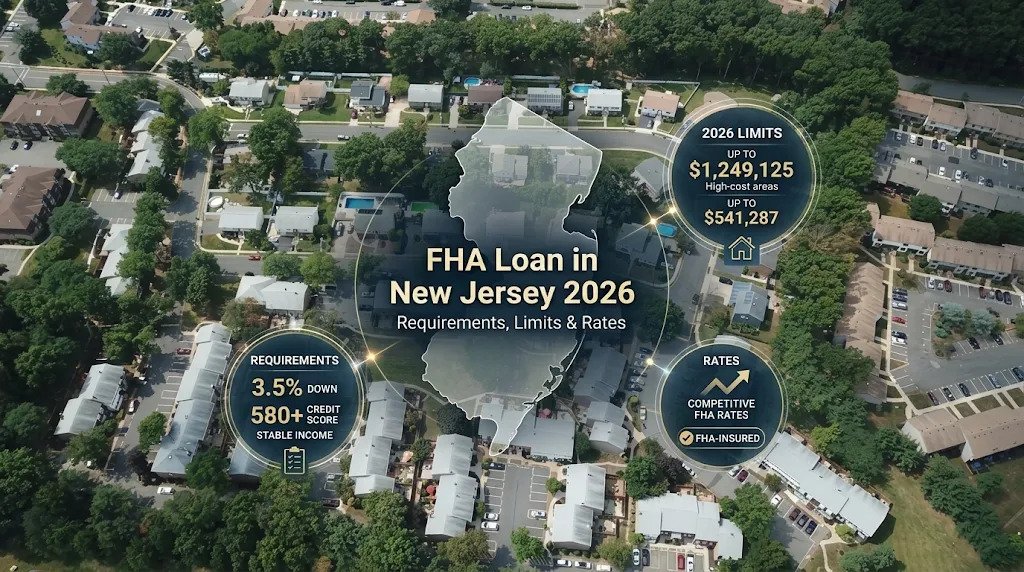
A second FHA loan uses the same qualification rules as the first one, with current 2026 numbers. With a credit score of 580 or higher, the minimum down payment is 3.5 percent. With a score of 500 to 579, the minimum down payment is 10 percent. Many lenders set higher minimums than HUD, often 620 or higher, so check with your lender before you write an offer. Your debt to income ratio, your employment history, and your cash reserves will all be reviewed again, even if you sailed through the first time. A promotion, a pay cut, a new car loan, or new credit card debt since your first purchase can change the result.
For 2026, the FHA loan limit floor for a one unit home is $541,287 in most counties, and the ceiling in high cost areas is $1,249,125. Your county limit falls somewhere in that range, and you can confirm it with HUD loan limit lookup tool. For details on limits by county, see the 2026 limits summary at Quicken Loans FHA loan limits guide. If you are moving to a more expensive county, or buying a larger home, the limit that applies is the limit for the new county, not the limit from your first purchase.
Mortgage insurance also starts fresh. The upfront mortgage insurance premium in 2026 is 1.75 percent of the base loan amount, and it is usually financed into the loan. The annual mortgage insurance premium is 0.55 percent, paid monthly. Take a $300,000 purchase as an example. With 3.5 percent down, you pay $10,500 at closing and borrow $289,500. The upfront premium is $5,066.25, which is usually added to the loan, for a total loan of about $294,566. The annual premium is about $1,592 per year, or about $133 per month, on top of principal, interest, taxes, and homeowners insurance. On a $400,000 purchase, 3.5 percent down is $14,000, the base loan is $386,000, the upfront premium is $6,755, and the annual premium is about $2,123 per year, or about $177 per month. Those are real monthly costs, so include them in your budget before you fall in love with a listing.

Waiting Periods After Bankruptcy or Foreclosure
A clean payoff has no waiting period, but a credit event does. HUD generally requires two years from a Chapter 7 bankruptcy discharge and three years from a foreclosure before a new FHA loan can be approved, subject to lender rules and extenuating circumstances. A short sale or deed in lieu of foreclosure can also trigger a waiting period. These rules apply whether it is your first FHA loan or your fifth, and they are separate from the one at a time rule. If your first FHA loan ended in foreclosure, talk to a lender early so you know exactly when you become eligible again and what documentation you will need to show that the cause is resolved and your finances are stable.
When a Conventional Loan Might Fit Better the Second Time
Repeat buyers often have more equity, a higher credit score, and a larger down payment than they had the first time. In that case, a conventional loan can sometimes cost less over time because you may be able to avoid mortgage insurance once you reach 20 percent equity, or you may qualify for a lower rate. FHA is still a strong choice if your credit is below 680, if your down payment is small, or if your debt to income ratio is on the high side. Ask your lender to compare the two options side by side on the same purchase price, with the same down payment, so you can see the monthly payment, the upfront costs, and the total mortgage insurance cost over five years. Do not assume FHA is automatically cheaper just because it worked well the first time.
Step by Step Plan for Getting an FHA Loan Twice
- Confirm the status of your current FHA loan. Is it active, paid off, or refinanced? Get a payoff statement if you are selling.
- Decide whether you will sell, refinance, or use an exception. If none of the four exceptions fits, plan to clear the old loan first.
- Check your credit, your income, and your debts. Pull your reports, fix errors, and avoid new debt while you shop.
- Confirm the FHA loan limit for the county where you want to buy, and set your price range around it.
- Save and document your down payment and closing costs. Keep gift letters and bank statements ready.
- Get preapproved with an FHA approved lender, and bring the documents for your situation, such as a relocation letter, a divorce decree, or proof of a growing household.
- Shop for a home that meets FHA property standards, get the appraisal, and close with a clear plan for moving in within 60 days.
Common Mistakes to Avoid
The most common mistake is assuming you can keep the first FHA home and buy a second FHA home without an exception. That plan usually fails in underwriting and can cost you an earnest money deposit if you have already made an offer. The second mistake is buying a home you do not plan to live in and calling it a primary residence. Occupancy fraud is a serious federal issue, and lenders check employment, addresses, and utility records. The third mistake is forgetting the one year occupancy rule. If you bought with FHA less than a year ago, you generally cannot apply for a second FHA purchase loan on a new primary residence until that year is satisfied, unless an exception applies. The fourth mistake is spending your sale proceeds before they are documented, or moving money between accounts without a paper trail. Keep every statement, and ask your lender before you move large sums.
The answer to the question in the title is simple, but the path depends on your facts. Can you get an FHA loan twice? Yes, as many times as you qualify, as long as you hold only one at a time or you fit a listed exception. Clear the old loan, requalify on current numbers, document your move, and budget for fresh mortgage insurance. If you do that, your second FHA loan can be just as straightforward as your first, and it can help you move up to a home that fits the next stage of your life.
Frequently Asked Questions
Can you get an FHA loan twice?
Yes. There is no lifetime limit on FHA loans. You can use FHA financing more than once, as many times as you qualify, provided you generally hold only one FHA insured mortgage at a time and the new home will be your primary residence.
Is FHA only for first time buyers?
No. FHA loans are popular with first time buyers, but repeat buyers can use them too. The program is open to anyone who meets the credit, income, down payment, and occupancy rules, whether it is their first home or their fourth.
Can I have two FHA loans at the same time?
Generally no, with four exceptions. You may hold two FHA loans at once for a job relocation more than 100 miles away, a growing family with at least 25 percent equity, divorce or legal separation, or if you were a non occupying co borrower on the first loan.
Do I have to wait after paying off my first FHA loan?
No. A clean payoff has no waiting period of its own. Once the loan is paid off at sale or in full, you can apply for a new FHA loan right away, subject to normal qualification. Waiting periods apply after bankruptcy or foreclosure, not after a clean payoff.
What credit score do I need for a second FHA loan?
HUD allows 3.5 percent down with a score of 580 or higher, and 10 percent down with a score of 500 to 579. Many lenders require a higher score, often 620 or more, so confirm your lender minimum before you shop for a home.
How much is the down payment on a second FHA loan?
The down payment rules are the same as the first time. On a $300,000 home, 3.5 percent down is $10,500. On a $400,000 home, 3.5 percent down is $14,000. If your score is 500 to 579, expect to put 10 percent down.
Do I pay mortgage insurance again on a second FHA loan?
Yes. Each new FHA loan carries its own mortgage insurance. In 2026, the upfront premium is 1.75 percent of the base loan amount, and the annual premium is 0.55 percent, paid monthly. It does not carry over from your old loan.
Can I use an FHA loan twice if I still own the first home?
Only if you fit one of the four exceptions, or if you refinance the first loan into a conventional loan so you no longer hold an FHA mortgage. Otherwise, you will need to sell the first home and pay off the FHA loan before you buy with FHA again.
What is the 100 mile rule for a second FHA loan?
If a job transfer or a new job requires you to move more than 100 miles from your current FHA financed home, you can get a second FHA loan near the new job. You will need a relocation or offer letter, and if you rent out the old home and count that income, you will generally need at least 25 percent equity in it.
Can I get an FHA loan after divorce if my ex keeps the house?
Yes. If you are leaving a jointly owned home because of divorce or legal separation, and the other borrower will stay in the home, you can apply for a new FHA loan for your own primary residence. Bring the divorce decree or separation agreement to your lender.
Does refinancing my FHA loan clear the way for a new one?
Refinancing into a conventional loan does, because you no longer hold an FHA mortgage. An FHA streamline refinance does not, because it replaces one FHA loan with another FHA loan on the same property.
What is the FHA loan limit for a repeat buyer in 2026?
For a one unit home in 2026, the floor is $541,287 in most counties and the ceiling is $1,249,125 in high cost areas. Your county limit applies to the new purchase, and it may be different from the limit that applied to your first home.