


The short answer is usually no, but there are exceptions. FHA generally allows only one FHA loan per borrower at a time, because every FHA loan must be for your primary residence, and you can only have one. But life does not always follow the general rule. People relocate for work, families grow, and marriages end, so FHA allows a second FHA loan in a small set of specific situations. This guide explains the general rule, each exception, what you still need to qualify, and what to do if you do not fit an exception.
The general rule: one FHA loan at a time
FHA loans are designed to help people buy a home to live in, not for investors or for building a property portfolio. That is why the program limits each borrower to one FHA-insured mortgage at a time. If you already have an FHA loan on your current home, a lender will normally deny a second FHA application. The rule applies per borrower, not per household, which is why the exceptions matter. If you are not sure how the basic program works, start here: What Are FHA Loans and How Do You Qualify?
Why FHA limits you to one loan
The limit exists because FHA insurance is backed by the government, and the program is meant to expand homeownership, not to subsidize real estate investing. Without the one-loan rule, a borrower could use low down payment FHA financing to collect rental properties. The rule also protects borrowers: two mortgages mean two payments, two sets of taxes and insurance, and two maintenance bills. The official FHA program page explains the purpose of the insurance: FHA loans at HUD
Exception 1: relocating for work
Relocation is the most common exception. If your job moves you to a new area, FHA may allow a second FHA loan for the home in the new location while you still have an FHA loan on the old home. The new home must be your primary residence, and the move must be genuine. As a general guide, the new home should be more than 100 miles from your current home, or the commute must be unreasonable. Your lender will ask for proof, such as a transfer letter, and the underwriter must document the reason. You do not have to sell the old home right away.
Exception 2: your family has grown
If your household has grown and your current home no longer fits, FHA may allow a second loan for a larger home. This usually means a new child, a parent moving in, or another dependent joining the household. The current home must be genuinely too small, not just less convenient. You also still need to qualify with both mortgage payments counted in your debt-to-income ratio until the first home is sold or refinanced.
Exception 3: divorce or separation
Divorce and legal separation are recognized exceptions. If a couple jointly owns a home with an FHA loan and then separates, one spouse can get a new FHA loan for a different primary residence while the other spouse keeps the original home and loan. The borrowing spouse must show the divorce or separation is real, usually with a decree or separation agreement, and must qualify on their own income. The spouse who keeps the home is expected to refinance it in time, but the new loan does not have to wait.
Exception 4: a non-occupying co-borrower
A non-occupying co-borrower signs the loan and shares responsibility for it but does not live in the home. Parents often do this to help a child buy a first home. FHA allows a person to be a non-occupying co-borrower on one FHA loan while holding their own FHA loan. The co-borrower is not using the second loan to buy a home for themselves, so it does not violate the one-primary-residence rule. The co-borrower must still qualify, and both loans count in their debt-to-income ratio. The primary borrower must still occupy the home.
Exception 5: vacating a jointly owned home
A related exception covers a borrower vacating a home they own jointly with someone else. For example, two people buy a home together with an FHA loan, and later one moves out. That person can apply for a new FHA loan for their own primary residence, even though their name is still on the first loan. The lender will want to see that the move is genuine and that the borrower who left is no longer living in the jointly owned home. The borrower must qualify with both payments counted until the first loan is resolved.
What the exceptions still require
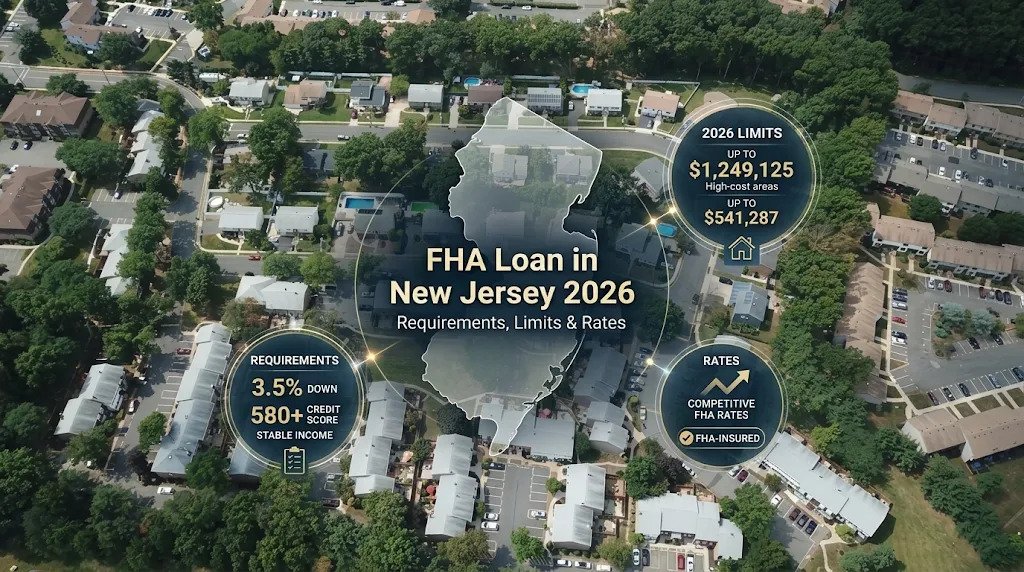
An exception does not remove the normal rules. The new home must still be your primary residence, and you must move in within 60 days and live there for at least one year. You still need a score of 580 or higher for a 3.5 percent down payment, or 500 to 579 for 10 percent. Both mortgage payments count in your debt-to-income ratio, which is often the hardest part: FHA generally wants total debts at or below 43 percent of income, and up to 50 percent only with strong compensating factors. And the loan must still fit the 2026 FHA limits: $541,287 in most areas and up to $1,249,125 in high-cost areas.
Can you rent out your first FHA home?
After you have lived in your FHA-financed home for at least one year, you can move out and rent it, and you can keep the FHA loan on it. FHA does not force you to refinance just because you moved. But renting out the first home does not let you take out a second FHA loan on a new home unless you fit one of the exceptions above. The one-year occupancy rule and the one-loan rule are different: the first lets you keep the loan after you move, while the second still blocks a new FHA loan while the old one is active. If you do not fit an exception, sell the first home or refinance it into a conventional loan, then apply for a new FHA loan. The limits on second homes are explained here: FHA Second Home and Investment Property
How to apply for a second FHA loan
If you fit an exception, start by talking to an FHA-approved lender and telling them the full story up front. Bring documentation for the reason: a transfer letter for relocation, a birth certificate or proof of a new dependent for family growth, or a divorce decree for separation. The lender will run your credit, verify your income, and calculate your debt-to-income ratio with both mortgage payments included. The underwriter must document the exception in the file, so expect extra paperwork. Get preapproved before you make an offer.
Alternatives if you do not qualify for an exception
If you do not fit an exception, you still have options. The most common is a conventional loan, which has no one-loan limit and can finance a second home or an investment property, though it usually needs a bigger down payment and stronger credit. Another option is to refinance your first FHA loan into a conventional loan, which frees you to use FHA again. This works well if you have at least 20 percent equity, because then the new loan has no PMI. If you are a veteran, a VA loan is another path with no down payment. The Consumer Financial Protection Bureau has a helpful comparison of loan types: CFPB: Owning a Home
Mistakes to avoid
The biggest mistake is assuming you can apply for a second FHA loan and sort out the details later. The application will be denied, and you will lose time and possibly a deal. A second mistake is buying a second home or vacation home with an FHA loan. FHA will not insure it, and misrepresenting your plans can be treated as mortgage fraud. A third mistake is forgetting that both mortgage payments count in your debt-to-income ratio. A fourth is moving out before the one-year occupancy mark, which violates the loan terms. A fifth is counting on rental income from the first home to qualify.
Conclusion
You usually cannot have two FHA loans at once, but the exceptions are real and they help real people: workers who relocate, families that grow, spouses who divorce, parents who co-sign, and co-owners who move on. If you fit one of these situations, document it and talk to your lender early. If you do not fit an exception, a conventional loan or a refinance of the first loan will usually work. The rule is strict, but it is not a dead end.
FAQs
Can you have two FHA loans at once?
Usually no. FHA allows one FHA loan per borrower at a time, with exceptions for relocation, family growth, divorce, a non-occupying co-borrower, and vacating a jointly owned home.
What are the exceptions to the one FHA loan rule?
Relocation for work, family growth, divorce or legal separation, a non-occupying co-borrower, and vacating a jointly owned home.
How far do you have to relocate to qualify for a second FHA loan?
As a general guide, the new home should be more than 100 miles from your current home, or the commute must be unreasonable. Your lender needs proof such as a transfer letter.
Can a married couple each have their own FHA loan?
Yes, in limited cases: if one spouse is a non-occupying co-borrower on the other’s loan, or after a divorce or separation.
Can you rent out your first FHA home and get a second FHA loan?
You can rent out the first home after living in it for at least one year and keep the FHA loan, but that alone does not let you take a second FHA loan. You still need an exception.
Do you have to sell your first home to get a second FHA loan?
No, not if you fit an exception. Without one, you usually need to sell the first home or refinance it into a conventional loan first.
Can a parent co-sign an FHA loan while having their own FHA loan?
Yes. A non-occupying co-borrower can co-sign an FHA loan while holding their own FHA loan on their own primary residence.
Do both mortgage payments count in your debt-to-income ratio?
Yes. The lender counts both mortgage payments in your DTI.
Can you use an FHA loan for a second home or vacation home?
No. FHA loans are only for a primary residence. Second homes and vacation homes need a conventional loan.
Can you use an FHA loan for an investment property?
No. FHA does not finance investment properties. You can buy a multifamily home with an FHA loan only if you live in one of the units.
How long must you live in your FHA home before moving?
You must move in within 60 days of closing and live there for at least one year.
Can you refinance your first FHA loan to get a second one?
Yes. Refinancing the first FHA loan into a conventional loan removes it from your record.
What if your first FHA loan is already paid off?
Then there is no problem. Once the first FHA loan is closed, you can apply for a new one right away.
Can you get a second FHA loan after a divorce?
Yes. Divorce or legal separation is a recognized exception, and the spouse who moves out can get a new FHA loan.
Does FHA check whether you really live in the home?
Yes. Lenders verify occupancy through your address, tax returns, and utility bills. Misrepresenting occupancy can be treated as mortgage fraud.






One Response