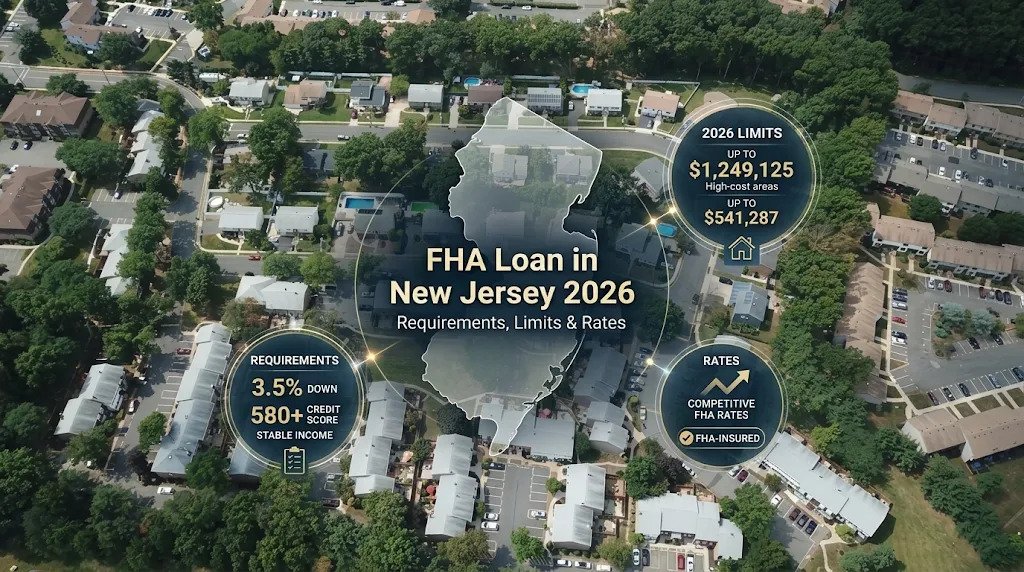


Does an FHA loan require mortgage insurance for life? For most borrowers, the honest answer is yes: FHA mortgage insurance for life is what you get when you put less than 10 percent down. The annual mortgage insurance premium, called MIP, stays on your loan for as long as you keep it. It does not drop off when you reach 20 percent equity, the way private mortgage insurance does on a conventional loan. The only ways out are to put at least 10 percent down at the start, which limits MIP to 11 years, or to refinance into a conventional loan once you have enough equity.
That one rule — FHA mortgage insurance for life — surprises more FHA borrowers than any other part of the program. People hear that mortgage insurance is temporary, because that is true for conventional loans, and they assume FHA works the same way. It does not. The difference can cost tens of thousands of dollars over the life of a loan, so it deserves a clear explanation before you sign, not after.
What FHA Mortgage Insurance Actually Is
FHA mortgage insurance is not insurance for you. It is insurance for your lender. If you stop paying and the home is sold for less than the loan balance, the Federal Housing Administration pays the lender’s loss out of the Mutual Mortgage Insurance Fund. That fund is paid for by borrowers, through the premiums on every FHA loan.
That is the trade behind the whole program. FHA lets you buy with 3.5 percent down and a 580 credit score, which no conventional lender would accept without a large risk premium. In exchange, every borrower pays mortgage insurance, and the fund stays healthy enough to keep the program running. The insurance does not protect your home, your equity or your family. It protects the lender, and it is the price of the low down payment.
The Upfront Premium: 1.75 Percent, Paid Once
The upfront mortgage insurance premium is 1.75 percent of your base loan amount on almost every FHA purchase loan, regardless of your down payment or credit score. Your base loan is the purchase price minus your down payment, before the premium is added.
On a $300,000 loan, the upfront premium is $5,250. On a $400,000 loan it is $7,000. Most buyers do not pay it in cash at closing. They finance it into the loan, which raises the loan balance and means interest is charged on the premium too. That is allowed and it is what most borrowers choose, because coming up with another $5,000 in cash at closing is hard enough after a down payment.
The upfront premium is not refundable if you sell or pay off the loan, with one exception. If you refinance into a new FHA loan, part of the unused upfront premium can be credited toward the new loan. But if you refinance into a conventional loan, the upfront premium is simply gone. It is a sunk cost, and it should be part of the math when you compare FHA against conventional.
The Annual Premium: What You Pay Every Month
The annual MIP is the charge that lasts for life in most cases, and it is billed monthly as part of your mortgage payment. The rate depends on your loan amount, your loan term and your loan to value ratio at origination. For a 30 year loan, which is what most borrowers take, the 2026 rates under HUD Mortgagee Letter 2023-05 are:
| Base loan amount | Down payment | Annual MIP rate | How long it lasts |
|---|---|---|---|
| $726,200 or less | Less than 5% | 0.55% | Life of the loan |
| $726,200 or less | 5% to under 10% | 0.50% | Life of the loan |
| $726,200 or less | 10% or more | 0.50% | 11 years |
| More than $726,200 | Less than 5% | 0.75% | Life of the loan |
| More than $726,200 | 5% to under 10% | 0.70% | Life of the loan |
| More than $726,200 | 10% or more | 0.70% | 11 years |

For a 15 year loan the rates are lower, because a shorter term is less risky for the fund. With a base loan of $726,200 or less, a 15 year loan carries 0.40 percent annual MIP when the loan to value ratio is above 90 percent, and 0.15 percent when it is 90 percent or less. The duration rule is the same: 11 years if you put 10 percent or more down, life of the loan if you put less.
Note the rate cut that still surprises people. In March 2023 HUD lowered annual MIP rates by 30 basis points, from 0.85 percent to 0.55 percent for most borrowers. If you read an older article that quotes 0.85 percent, it is out of date.
Here is what the monthly cost looks like in real numbers. Take a $300,000 base loan with 3.5 percent down on a 30 year term. The upfront premium is $5,250. The annual MIP is 0.55 percent of $300,000, which is $1,650 a year, or $137.50 a month in the first year. The monthly amount falls slowly as the loan balance falls, because the premium is recalculated on the remaining balance each year, but it never reaches zero while the loan is alive.
FHA Mortgage Insurance for Life: The Down Payment Rule
The duration of your annual MIP is decided by one number: your loan to value ratio when the loan starts, which is just another way of saying how much you put down. The rule comes from Mortgagee Letter 2013-04 and applies to FHA case numbers assigned on or after June 3, 2013, which covers nearly every FHA loan in existence today.
If your loan to value ratio is over 90 percent, meaning you put less than 10 percent down, annual MIP lasts for the full loan term. On a 30 year loan, that is 30 years of monthly premiums. If your loan to value ratio is 90 percent or less, meaning you put 10 percent or more down, annual MIP stops after 11 years.
That is the whole rule of FHA mortgage insurance for life, and it is worth reading twice, because it contradicts what most people expect. Building equity does not remove FHA MIP. Paying the loan down to 80 percent loan to value does not remove it. A rising home value does not remove it. Only two things remove it: the 11 year clock running out after a 10 percent down payment, or refinancing out of the FHA loan entirely.
The 10 percent down payment is therefore a much bigger decision than it looks. Going from 3.5 percent to 10 percent down on a $400,000 home means finding an extra $26,000 in cash. That is a lot of money. But it buys you an end date for a premium that would otherwise cost roughly $180 a month for 30 years.
There is one exception to the life of the loan rule, and it applies to a shrinking group of borrowers. If your FHA loan had its case number assigned before June 3, 2013, the old rules apply, and annual MIP can be canceled once your loan balance reaches 78 percent of the original home value, as long as you have made at least five years of on time payments. If you have one of those older loans, a call to your servicer is all it takes to confirm. But do not count on this if your loan is newer, because every FHA loan originated in the last thirteen years follows the current rule.
FHA Mortgage Insurance for Life vs PMI: Why Conventional Insurance Is Different
The confusion usually starts with private mortgage insurance, PMI, on conventional loans. PMI works the way most people assume all mortgage insurance works. You pay it while your equity is below 20 percent, and once your loan balance reaches 80 percent of the home’s original value you can ask the lender to cancel it. Once it reaches 78 percent, the lender must cancel it automatically, as long as you are current on payments. PMI typically costs 0.3 percent to 1.5 percent of the loan amount per year, depending on your credit score.
FHA mortgage insurance for life has none of that. There is no equity threshold that cancels it, no automatic termination at 78 percent, and no request you can make at 80 percent. The premium is set by your down payment at origination and it stays until the loan ends or you refinance. The only advantage FHA has on price is that the MIP rate does not depend on your credit score, while PMI gets expensive fast for a borrower with a 620 score.
| Feature | FHA MIP | Conventional PMI |
|---|---|---|
| Required when | On every FHA loan | Down payment under 20% |
| Upfront charge | 1.75% of loan amount | Usually none, or a single premium option |
| Annual cost | 0.50% to 0.75% for most loans | 0.3% to 1.5%, depends on credit score |
| Ends at 20% equity | No | Yes, on request at 80% LTV |
| Ends automatically | No, except after 11 years with 10% down | Yes, at 78% LTV |
| Rate depends on credit score | No | Yes |
A note on mortgage insurance as part of the monthly payment: mortgage insurance is one of the four parts of a monthly mortgage payment. You can read how PITI breaks down in our sister guide to what PITI is.
How to Remove FHA Mortgage Insurance
Since FHA mortgage insurance for life does not drop off on its own for most borrowers, you need a plan to get rid of it. There are three realistic options, and each one fits a different situation.
Wait out the 11 years. If you put 10 percent or more down, MIP ends automatically after 11 years. You do not need to apply, call anyone or refinance. This is the simplest path, but it only works if you made the larger down payment at the start.
Refinance into a conventional loan. This is the option most borrowers actually use. Once you have at least 20 percent equity in your home, through a combination of principal payments and rising home values, you can refinance into a conventional loan and FHA mortgage insurance for life disappears immediately, because conventional loans do not carry MIP. You will pay closing costs on the refinance, typically 2 to 5 percent of the loan amount, so compare the monthly saving against the closing cost and work out how many months it takes to break even. If you plan to stay in the home for years, the refinance usually wins by a wide margin. Watch the rate when you refinance. If conventional rates are higher than your current FHA rate, the higher interest can eat the MIP saving.
Refinance into a new FHA loan. An FHA streamline refinance can lower your rate with less paperwork and no appraisal in many cases, but it does not remove MIP. Your new FHA loan carries its own upfront premium and its own annual premium, and the life of the loan clock starts again. A streamline refinance is a rate tool, not an MIP exit, so do not choose it if removing the premium is your goal.
How Much Does Lifetime MIP Really Cost?
The total cost of FHA mortgage insurance for life is what makes the rule matter. Take a $350,000 base loan with 3.5 percent down on a 30 year term. The upfront premium is $6,125, financed into the loan. The annual MIP starts at $160.42 a month and declines slowly as the balance falls. Over 30 years, the borrower pays roughly $38,000 to $40,000 in annual MIP alone, plus the $6,125 upfront premium. That is a large sum for insurance that protects the lender, not the borrower.
Now compare the same borrower with 10 percent down. The base loan is smaller, the upfront premium is smaller, and FHA mortgage insurance for life stops after 11 years, so the total MIP paid falls by more than half. Or compare refinancing into a conventional loan after five years, once the home has appreciated and the balance has fallen to 80 percent of the value. The borrower pays five years of MIP, then none at all for the remaining 25 years.
None of this means FHA is a bad loan. For a buyer who cannot otherwise buy a home, the MIP is the cost of getting in the door years earlier, and the equity built over those years usually dwarfs the premium paid. But it does mean you should go in with your eyes open, and with a plan for the day the MIP comes off. Before you take an FHA loan, ask your lender to show you the MIP cost in writing on the loan estimate, both the upfront premium and the monthly amount. Ask for a side by side comparison with a conventional loan at the same price, including PMI, so you can see which one costs less per month and over five years. And set a calendar reminder for the date your equity is likely to reach 20 percent, so you can start the refinance conversation when the time is right.
FHA mortgage insurance for life is not a trap and it is not a scam. It is a clearly written rule that has been in place since 2013, and it is the reason the program can lend to buyers with small down payments. The mistake is not taking the loan. The mistake is taking it without knowing the rule, and then discovering it five years later when the premium is still on the statement.
Frequently Asked Questions
Does an FHA loan require mortgage insurance for life?
Yes, in most cases. If you put less than 10 percent down, the annual MIP lasts for the life of the loan. If you put 10 percent or more down, it ends after 11 years. The only other way to remove it is to refinance into a conventional loan once you have at least 20 percent equity.
What is the upfront MIP on an FHA loan in 2026?
The upfront mortgage insurance premium is 1.75 percent of your base loan amount. On a $300,000 loan that is $5,250. Most borrowers finance it into the loan instead of paying it in cash at closing, and it is not refundable if you sell or pay off the loan.
What is the annual MIP rate on an FHA loan in 2026?
For most borrowers on a 30 year loan, the annual MIP is 0.55 percent of the loan balance when you put less than 5 percent down, and 0.50 percent when you put 5 percent or more down. On loans over $726,200 the rates are 0.75 percent and 0.70 percent. For 15 year loans the rates are lower, from 0.15 percent to 0.65 percent.
Can mortgage insurance be removed from an FHA loan?
Yes, but not by building equity alone. You can remove it by refinancing into a conventional loan once you have 20 percent equity, or it ends automatically after 11 years if you put at least 10 percent down at origination. FHA streamline refinancing does not remove it.
How long does MIP last if I put 10 percent down?
Eleven years. With a loan to value ratio of 90 percent or less at origination, the annual MIP stops after 11 years and you do not need to apply or refinance. The upfront premium of 1.75 percent still applies at closing.
Does FHA mortgage insurance drop off at 20 percent equity?
No. Unlike PMI on a conventional loan, FHA MIP does not drop off when you reach 20 percent equity. There is no equity threshold that cancels it on loans originated after June 2013. You must refinance into a conventional loan to remove it.
What is the difference between FHA MIP and PMI?
MIP is the mortgage insurance on FHA loans, PMI is the insurance on conventional loans. PMI can be canceled at 80 percent loan to value and ends automatically at 78 percent, and its cost depends on your credit score. MIP lasts for the life of the loan with less than 10 percent down, and its rate does not depend on your credit score.
Did the FHA lower MIP rates recently?
Yes. In March 2023 HUD lowered annual MIP rates by 30 basis points under Mortgagee Letter 2023-05, from 0.85 percent to 0.55 percent for most borrowers. The 0.55 percent rate is still current in 2026.
Can I cancel MIP on an old FHA loan?
If your FHA loan had its case number assigned before June 3, 2013, the old rules apply and MIP can be canceled once your balance reaches 78 percent of the original value and you have made five years of on time payments. Loans originated after that date follow the current life of the loan rule.
Is it worth refinancing out of an FHA loan to remove MIP?
Usually yes, once you have 20 percent equity and the numbers work. Compare the monthly MIP saving against the refinance closing costs, which run 2 to 5 percent of the loan amount, and work out the break even point in months. If you will stay in the home well past that point, refinancing usually saves tens of thousands of dollars.
Does an FHA streamline refinance remove mortgage insurance?
No. A streamline refinance lowers your rate with less paperwork, but the new FHA loan carries its own upfront premium and its own annual MIP, and the life of the loan clock starts again. It is a rate tool, not a way out of MIP.
How much does FHA mortgage insurance cost over 30 years?
On a $350,000 base loan with 3.5 percent down, the upfront premium is $6,125 and the annual MIP totals roughly $38,000 to $40,000 over 30 years. With 10 percent down, the total falls by more than half because MIP stops after 11 years, and refinancing into a conventional loan at 20 percent equity saves even more.
#FHAMortgageInsurance #FHA #MIP #MortgageInsurance #FHALoan #Refinance