

Buying a home with an FHA loan can require as little as 3.5% down, but even that amount can be difficult to save. FHA Loan Down Payment Assistance Programs You Should Know can help eligible buyers reduce the cash they need for the down payment and, depending on the program, closing costs.
The important point is that down payment assistance is not one national program with one set of rules. State housing agencies, local governments, nonprofits, employers, and other approved organizations can offer different forms of assistance. Some programs provide grants, while others use a second mortgage that may be deferred, forgiven, or repaid over time. The Consumer Financial Protection Bureau confirms that many state, local, and nonprofit programs can be used with FHA financing.
In this guide, you will learn how FHA down payment assistance works, what types of programs are available, who may qualify, real examples from different states, and how to compare assistance without overlooking the long term cost.
What Is FHA Down Payment Assistance?
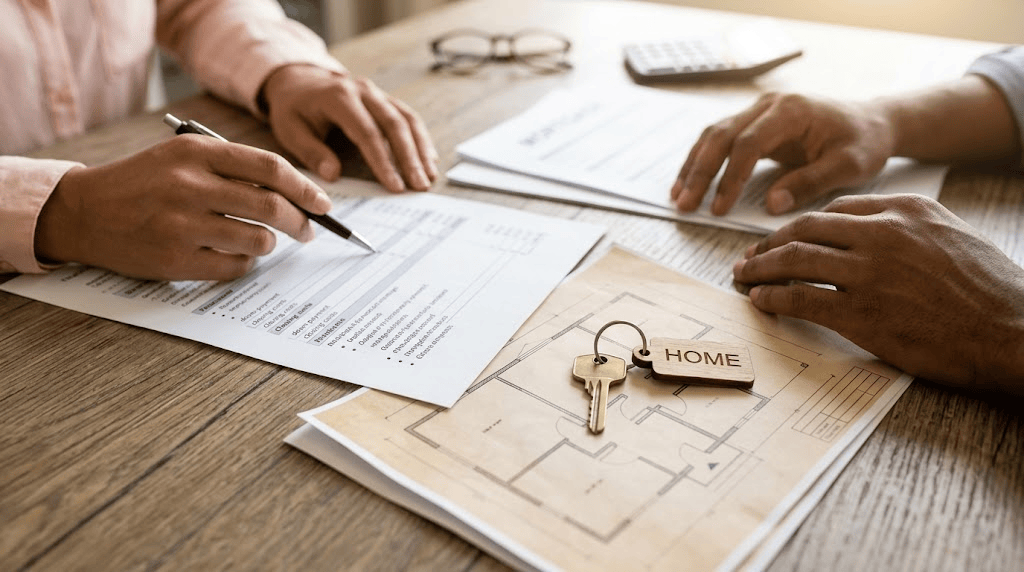
FHA down payment assistance is financial help that can reduce the amount of your own money needed to complete an FHA home purchase.
For an FHA borrower who qualifies for the standard minimum down payment, 3.5% is the key figure. For example, on a $300,000 home, 3.5% equals $10,500.
A down payment assistance program could potentially cover some or all of that amount, depending on its rules. However, assistance does not automatically mean you can buy a home with zero cash. You may still have closing costs, prepaid expenses, reserves, inspections, appraisal costs, or other required funds.
HUD also recognizes secondary financing from eligible government entities and nonprofits as a way to provide assistance to FHA borrowers through a second mortgage or lien.
Why does down payment assistance matter?
The upfront cash requirement is often more complicated than simply saving for a down payment.
The CFPB recommends considering your total available savings, closing costs, moving expenses, emergency savings, and other financial goals before deciding how much cash to put into a home. It notes that closing costs commonly range from about 2% to 5% of the purchase price, although actual costs vary.
That means a buyer should evaluate cash to close, not just the down payment.
FHA Loan Down Payment Assistance Programs You Should Know
There is no single nationwide DPA program that every FHA borrower can use. Instead, assistance usually comes from several sources.
1. State housing finance agency programs
State housing finance agencies are among the first places to look.
These agencies may offer:
- Down payment grants
- Deferred second mortgages
- Forgivable second mortgages
- Low interest second mortgages
- Closing cost assistance
- Special programs for first time buyers
- Programs for teachers, veterans, public employees, or other targeted groups
Eligibility often depends on income, credit, purchase price, location, occupancy, and whether you are a first time buyer.
For example, California’s CalHFA MyHome Assistance Program currently offers a deferred junior loan for eligible borrowers using CalHFA government financing, including FHA. The assistance can be up to the lesser of 3.5% of the purchase price or appraised value for government loans. CalHFA also requires qualifying borrowers to complete homebuyer education.
2. Local city and county programs
Your state may not be the only source.
Cities and counties sometimes have their own homebuyer assistance programs. These can have rules that are very different from statewide programs.
A local program may require you to:
- Purchase within a specific geographic area
- Meet an income limit
- Use the property as your primary residence
- Complete homebuyer education
- Use an approved lender
- Remain in the property for a specific period
This is one of the biggest opportunities buyers overlook. Searching only for national FHA programs can cause you to miss assistance available in your own community.
3. Nonprofit and community programs
HUD approved nonprofits and governmental entities can participate in FHA secondary financing programs.
Nonprofit programs can be structured differently from government housing agency programs. Some may provide grants, while others offer loans with repayment or forgiveness conditions.
Before accepting assistance, ask exactly what happens if you sell, refinance, move, or pay off your first mortgage.
4. Lender offered assistance
Some lenders participate in special assistance programs or offer credits that can reduce certain upfront costs.
However, lender assistance should be evaluated alongside the entire mortgage offer. A program that provides $5,000 in assistance is not necessarily the best deal if it comes with a higher interest rate or other costs.
The CFPB recommends comparing official Loan Estimates before making a final mortgage decision.
How Do FHA Down Payment Assistance Programs Work?
The structure of DPA is more important than the headline dollar amount.
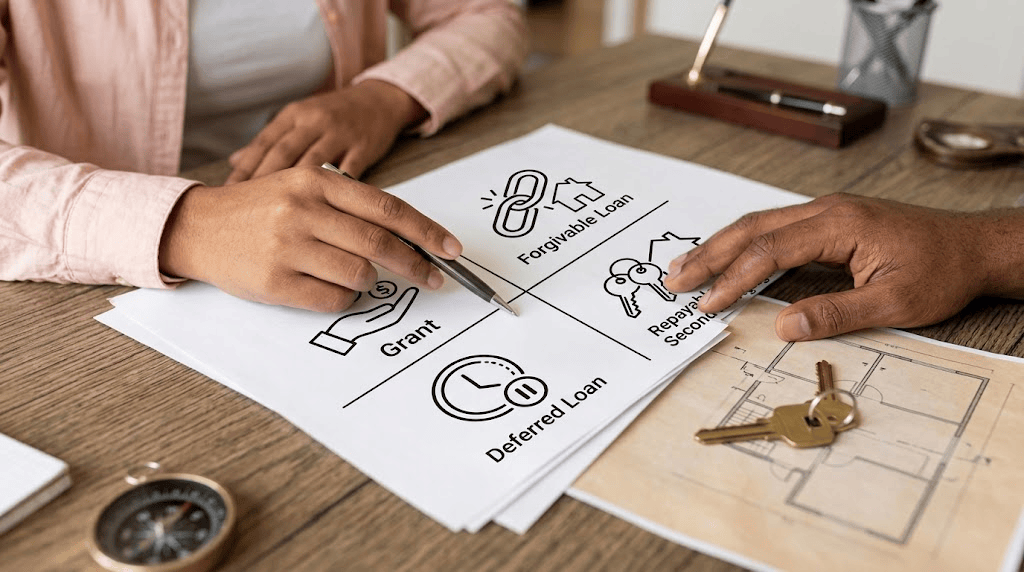
Grants
A grant generally does not have to be repaid when all program conditions are satisfied.
However, do not assume every program labeled a “grant” is unconditional. Some assistance may require the borrower to occupy the home for a specific period or meet other requirements.
Forgivable second mortgages
A forgivable second mortgage provides assistance that can eventually be forgiven.
For example, Ohio’s current OHFA Down Payment Assistance program offers 3.5% for government loans such as FHA, VA, and USDA. The assistance can be used toward down payment, closing costs, or other eligible pre-closing expenses, and OHFA states that the assistance is forgiven after seven years. Selling within that period can trigger repayment.
Deferred second mortgages
A deferred second mortgage does not necessarily require monthly payments.
Instead, repayment may become due when you sell the property, refinance, pay off the first mortgage, or stop meeting occupancy requirements.
CalHFA describes its MyHome assistance as a deferred payment junior loan.
Amortizing second mortgages
Some programs require monthly payments.
MassHousing, for example, describes DPA options that can include deferred assistance as well as 15 year amortizing second mortgages. Current program terms should always be confirmed before applying because housing agency offerings can change.
The key lesson: $10,000 of assistance is not automatically better than $7,500. You need to compare the repayment rules, interest rate, forgiveness period, and effect on your monthly payment.
Who Can Qualify for FHA Down Payment Assistance?
Every program creates its own eligibility requirements, but common requirements include the following.
Credit score
Your FHA lender will evaluate your credit under FHA and lender underwriting rules. DPA programs may impose additional credit requirements.
For example, OHFA currently lists a 650 minimum credit score for FHA loans within its program, which is higher than the baseline FHA policy borrowers often associate with FHA financing.
This illustrates an important point: qualifying for an FHA loan does not automatically mean qualifying for a particular DPA program.
Income limits
Many assistance programs are designed for low to moderate income households.
Your income limit may depend on:
- Household size
- County
- Property location
- Program type
- Whether you are a first time buyer
First time homebuyer status
Many programs focus on first time buyers.
However, “first time homebuyer” does not always mean you have never owned property. Some programs use a lookback period or provide exceptions for buyers purchasing in designated areas.
Primary residence
DPA is generally intended to help people purchase a home they will occupy.
Investment properties and second homes usually do not qualify for standard first time buyer assistance.
Homebuyer education
Education is another common requirement.
CalHFA requires eligible first time borrowers using its programs to complete approved homebuyer education and counseling.
State Examples of FHA Down Payment Assistance
Looking at real programs makes the differences easier to understand.
California
CalHFA’s MyHome Assistance Program can provide eligible FHA borrowers with deferred assistance up to the lesser of 3.5% of the purchase price or appraised value for down payment and/or closing costs. The program has first time buyer, income, occupancy, property, and education requirements.
Ohio
OHFA currently offers 3.5% assistance with government loans, including FHA. The agency states that the assistance can be used toward down payment and closing costs and is forgiven after seven years, subject to program requirements.
Indiana
IHCDA provides several homeownership programs. Its current program information lists assistance levels such as 2.5%, 3.5%, and 5%, depending on the program. The agency’s FAQ explains that its DPA is generally structured as a second mortgage with no interest or monthly payments, but the balance must be repaid under specified events such as sale, refinance, loan maturity, or loss of owner occupancy.
IHCDA reported that its Homeownership Program assisted 3,086 homebuyers in 2025 and provided more than $33.3 million in down payment assistance.
Massachusetts
MassHousing offers DPA to eligible first time homebuyers purchasing primary residences throughout Massachusetts. Its current published program information lists assistance of up to $30,000, with different repayment structures depending on the option.
MassHousing also announced program changes in 2026, including the discontinuation of its expanded 0% deferred DPA option in June. This is a useful reminder that DPA terms can change during the year, so borrowers should verify the current program rules rather than relying on an old article or social media post.
How to Find FHA Down Payment Assistance in Your Area
Finding assistance is easier when you search in the right order.
Step 1: Start with your state housing agency
Search for your state’s official housing finance agency and look for homebuyer assistance or down payment assistance.
Step 2: Check city and county programs
Look at the housing or community development department where you plan to buy.
Step 3: Ask your lender
Ask whether the lender participates in state, local, nonprofit, or employer sponsored DPA programs.
Step 4: Contact a HUD approved housing counselor
HUD maintains information about approved nonprofit organizations and governmental entities involved in housing programs.
Step 5: Compare the complete mortgage
Do not compare programs only by the amount of assistance.
Compare:
- Interest rate
- APR
- Monthly mortgage payment
- Mortgage insurance
- DPA repayment requirements
- Forgiveness period
- Closing costs
- Income and purchase price limits
- Required buyer contribution
- What happens if you refinance or sell
A Simple FHA Down Payment Assistance Example
Consider a buyer purchasing a $300,000 home.
At 3.5%, the basic FHA down payment would be:
$300,000 × 3.5% = $10,500
Now imagine the buyer qualifies for a DPA program offering assistance equal to 3.5% of the eligible purchase price.
On paper, the $10,500 assistance could match the 3.5% minimum down payment.
But the buyer should not assume the entire transaction requires no cash.
There may still be:
- Closing costs
- Prepaid taxes and insurance
- Homeowners insurance
- Appraisal or inspection expenses
- Earnest money considerations
- Required borrower contribution under the DPA program
This is the practical distinction many generic DPA articles miss: reducing the down payment is not the same as eliminating the total cash needed to close.
The right question is not “How much DPA can I get?”
It is:
“How much cash will I actually need to bring to closing after all assistance and required costs are calculated?”
Are FHA Down Payment Assistance Programs Worth It?
They can be, especially if saving the required cash is the main obstacle preventing you from buying.
DPA can help you preserve savings for emergencies, moving costs, repairs, and other early homeowner expenses.
But assistance can also create another financial obligation. A deferred second mortgage may have no monthly payment, but that does not necessarily mean the balance disappears. A repayable second mortgage can increase your total debt and monthly housing cost.
The best program is the one that improves your overall financial position, not simply the one with the largest advertised assistance amount.
What Should You Do Before Applying?
Before choosing an FHA DPA program, prepare:
- Recent pay stubs
- Bank statements
- Employment history
- Tax documents if required
- Credit information
- Estimated purchase price
- Information about household income
- Details about the property you want to purchase
Then ask the lender or program administrator:
Is the assistance a grant, forgivable loan, deferred loan, or repayable second mortgage?
Also ask:
When does repayment begin?
What happens if I refinance?
What happens if I sell the home?
Is there a required minimum buyer contribution?
Can the assistance cover closing costs as well as the down payment?
These questions can prevent an unpleasant surprise years after closing.
Conclusion: Choose Assistance Based on the Full Cost
FHA down payment assistance can make homeownership more accessible, but every program has its own rules. State agencies, cities, counties, nonprofits, and lenders may offer assistance through grants, forgivable loans, deferred second mortgages, or amortizing second mortgages.
The strongest approach is to start with official program sources, confirm current eligibility, calculate your actual cash to close, and compare the complete mortgage cost.
If you are considering an FHA loan, do not stop at the advertised assistance amount. Look at the repayment terms, interest rate, monthly payment, and long term cost together.
For current program availability, borrowers should verify requirements directly with the applicable housing agency, HUD approved counselor, or participating lender because DPA funding and program rules can change.
FAQ Section
Can I use down payment assistance with an FHA loan?
Yes. Many state, local, and nonprofit programs offer down payment assistance that can be used with FHA financing. HUD also permits eligible secondary financing arrangements for FHA borrowers.
Does FHA down payment assistance have to be repaid?
It depends on the program. Some assistance is a grant, some is forgivable after a required period, and some is a deferred or amortizing second mortgage that must be repaid under specific conditions.
Can down payment assistance cover FHA closing costs?
Some programs allow assistance to be used for both the down payment and eligible closing costs. The permitted uses depend on the specific program.
Do I have to be a first time homebuyer?
Not always. Many DPA programs target first time buyers, but some allow repeat buyers, buyers purchasing in targeted areas, or borrowers who meet other special criteria.
How much down payment assistance can I get?
The amount varies widely. Some programs use a percentage of the purchase price or loan amount, while others provide a fixed dollar amount. Examples include state programs offering 2.5%, 3.5%, or 5%, while some programs advertise assistance in fixed dollar amounts.
Where can I find FHA down payment assistance programs?
Start with your state housing finance agency, then check city and county housing programs, HUD approved housing counseling agencies, nonprofits, and participating mortgage lenders.