
If you already own a home and are thinking about buying another property, you may wonder whether you can use an FHA loan for a second home. FHA loans are popular because they can offer flexible credit requirements and a lower down payment than many conventional mortgage options.
However, FHA loans are mainly designed to help people purchase a primary residence. That means you generally cannot use an FHA loan simply to buy a vacation home, rental property, or investment property.
There are some important exceptions. Understanding the FHA occupancy rules can help you determine whether you may qualify for another FHA financed property.
Can You Use an FHA Loan for a Second Home?

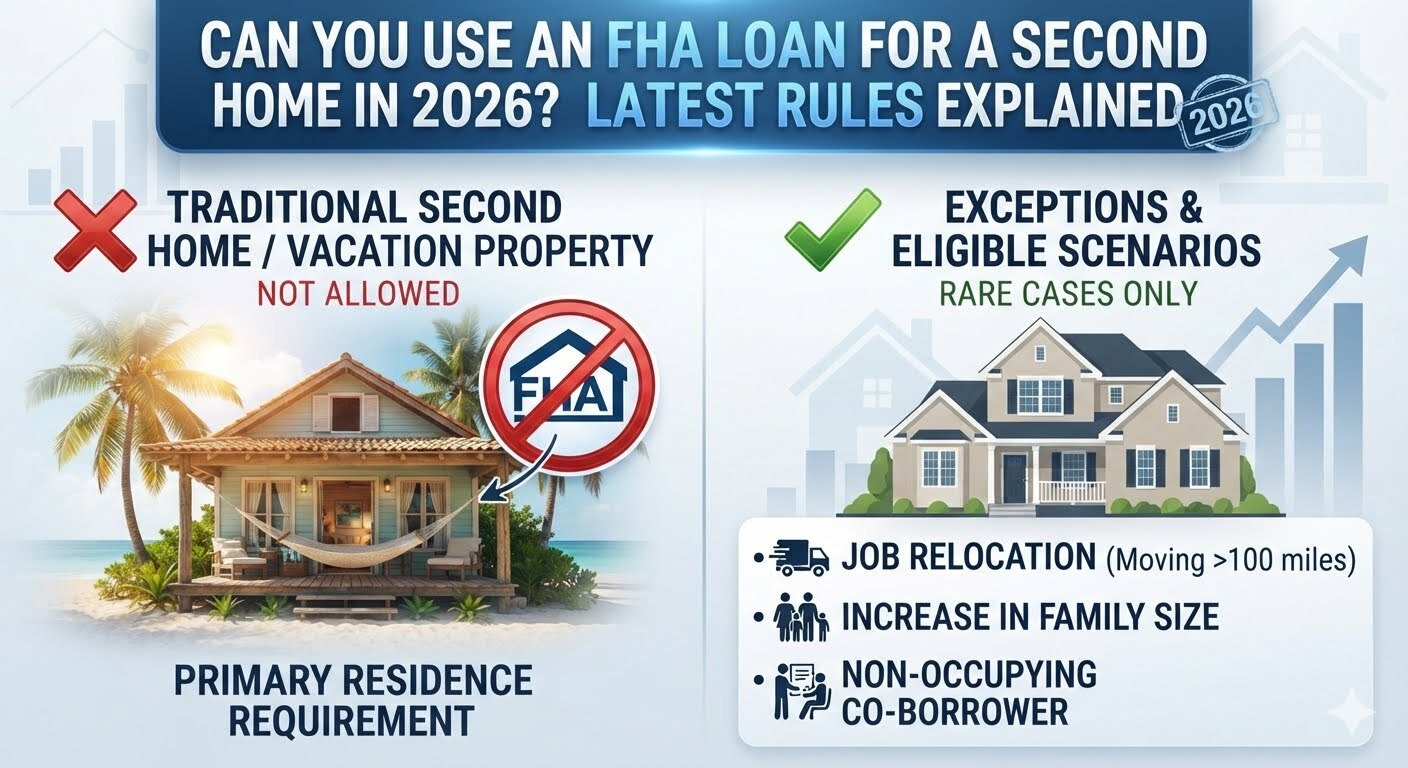
In most situations, you cannot use an FHA loan to purchase a second home if the property will not become your primary residence.
The Federal Housing Administration requires borrowers to occupy the FHA financed property as their primary residence. You generally need to move into the home and use it as your main residence.
This rule is important because FHA loans are intended to support homeownership rather than property investment.
For example, if you currently own a home and want to purchase a beach house that you will only use during vacations, an FHA loan usually will not be appropriate.
Likewise, buying another property strictly as a rental or investment property generally does not meet FHA occupancy requirements.
Why Does FHA Have Occupancy Requirements?
FHA loans are insured by the Federal Housing Administration. Because the program is designed to make homeownership more accessible, borrowers must meet specific occupancy requirements.
The basic idea is simple. If you use an FHA mortgage, the property should normally be your primary residence.
This requirement helps prevent borrowers from using FHA financing to build investment property portfolios.
You cannot simply tell the lender that you intend to live in the property if your actual plan is to use it only as a vacation property or rental.
Can You Have More Than One FHA Loan?

Yes, in certain circumstances, a borrower may be able to have more than one FHA insured mortgage.
However, qualifying for multiple FHA loans is not automatic. You must have a legitimate reason that fits FHA guidelines.
One possible situation involves a change in your circumstances that requires you to move.
Relocating for Work
Suppose you have an FHA mortgage on your current home but receive a job opportunity in another area. If the new location is far enough away and you need to establish a new primary residence, you may potentially qualify for another FHA loan.
The exact requirements depend on your circumstances and the lender’s underwriting process.
Growing Household
Another possible exception can apply when your household has grown and your current home no longer provides enough space.
For example, if your family has increased significantly and your existing property cannot reasonably accommodate everyone, you may have a path toward purchasing another primary residence with FHA financing.
You will need to provide documentation and meet the applicable FHA requirements.
Vacating a Home Because of Certain Circumstances
There can also be situations where you need to leave your current residence because of circumstances that make continued occupancy impractical.
Because FHA rules can be specific, borrowers should discuss their situation with an FHA approved lender before assuming they qualify for another FHA mortgage.
FHA Loan Occupancy Rules in 2026
One of the most important FHA requirements is the primary residence rule.
Generally, you must intend to occupy the property as your primary residence. FHA guidelines commonly require the borrower to move into the home within a reasonable period after closing and maintain occupancy according to FHA requirements.
This means an FHA mortgage generally is not designed for:
- Vacation homes
- Investment properties
- Properties purchased only for rental income
- Second homes that you will not occupy as your primary residence
The purpose of the loan matters. Your lender will review your application, property, finances, and intended occupancy.
What If You Want to Buy a Vacation Home?
If your goal is to purchase a vacation property, an FHA loan usually is not the right financing choice.
A conventional mortgage may be more suitable for a second home, depending on your financial profile and the property.
Second home financing can have different requirements for credit, down payment, reserves, debt levels, and occupancy.
You should compare different mortgage programs before choosing a loan.
What If You Want to Buy a Rental Property?
FHA financing generally cannot be used to purchase an investment property.
However, there is an important distinction for borrowers interested in rental income.
An FHA borrower may purchase a qualifying multi unit property and live in one of the units as their primary residence. Depending on the property and applicable requirements, the other units may be rented.
This strategy can allow an owner occupant to combine homeownership with rental income while still following FHA occupancy rules.
Example
Imagine you purchase a four unit property using an FHA mortgage.
You live in one unit as your primary residence and rent the other units to tenants.
This can be different from purchasing a separate property solely as an investment.
The property and borrower still need to meet FHA and lender requirements.
Can You Buy Another Home After an FHA Loan?
Yes. Having an FHA mortgage does not prevent you from buying another home in the future.
The financing method for your next property depends on your circumstances.
If you move and make the new property your primary residence, you may have mortgage options available to you.
If you want to keep your current home and purchase a separate vacation or investment property, you may need to consider conventional financing or another suitable loan program.
Your income, credit profile, debt, assets, property type, and occupancy plans can all affect your choices.
FHA Loan for a Second Home vs Conventional Loan
If your goal is specifically to purchase a second home, conventional financing may provide more suitable options.
Here is a simple comparison:
| Feature | FHA Loan | Conventional Loan |
|---|---|---|
| Primary residence | Yes | Yes |
| Second home | Generally no | Often possible |
| Investment property | Generally no | Often possible |
| Lower down payment | Often available | Depends on program |
| Mortgage insurance | FHA mortgage insurance applies | Depends on loan structure |
| Occupancy rules | Strict primary residence rules | Different rules for second homes |
The best choice depends on your financial situation and what you plan to do with the property.
What Should You Do Before Applying?
Before applying for another mortgage, review your current FHA loan and financial situation.
Start by determining whether the new property will truly become your primary residence.
Next, review your income, monthly debts, credit history, savings, and available funds for the purchase.
You should also speak with a qualified lender who can review your specific circumstances and explain which programs may be available.
Do not assume that owning an FHA financed property automatically disqualifies you from getting another mortgage. At the same time, do not assume that you can use FHA financing for any second property.
Your occupancy plan is one of the most important factors.
Frequently Asked Questions
Can I use an FHA loan to buy a vacation home?
Generally, no. FHA loans are intended for primary residences, so a vacation home that you will not occupy as your main residence generally will not qualify.
Can I have two FHA loans at the same time?
In some situations, yes. FHA rules allow certain exceptions when the borrower has a legitimate reason for obtaining another FHA mortgage. Your circumstances must meet applicable requirements.
Can I use an FHA loan to buy a rental property?
Generally, no. FHA financing is intended for owner occupied properties. However, you may be able to purchase a multi unit property, live in one unit, and rent other units if you meet the applicable requirements.
Can I keep my current FHA home and buy another house?
It may be possible, depending on your circumstances and the financing used for the new property. If you want another FHA loan, you must meet the applicable FHA exception requirements.
What if I need to move because of my job?
A job related relocation may be one situation that can support eligibility for another FHA mortgage. The specific facts and distance involved matter, so speak with an FHA approved lender.
Can I buy a second home with a conventional mortgage?
Yes, conventional mortgages may offer financing for qualifying second homes. Requirements can differ based on the lender, property, borrower finances, and intended use.
Is an FHA loan good for buying another property?
An FHA loan can be useful when the property will become your primary residence and you meet the program requirements. It generally is not intended for vacation or investment properties.
Final Thoughts
So, can you use an FHA loan for a second home in 2026?
Usually, no, if the property is simply a vacation home or investment property. FHA loans are primarily designed for primary residences. However, certain borrowers may qualify for another FHA loan when specific circumstances apply, such as a qualifying relocation or significant household change.
If you already have an FHA mortgage and want to purchase another property, do not make assumptions about your eligibility. Review your situation with an FHA approved lender and compare the financing options available to you.