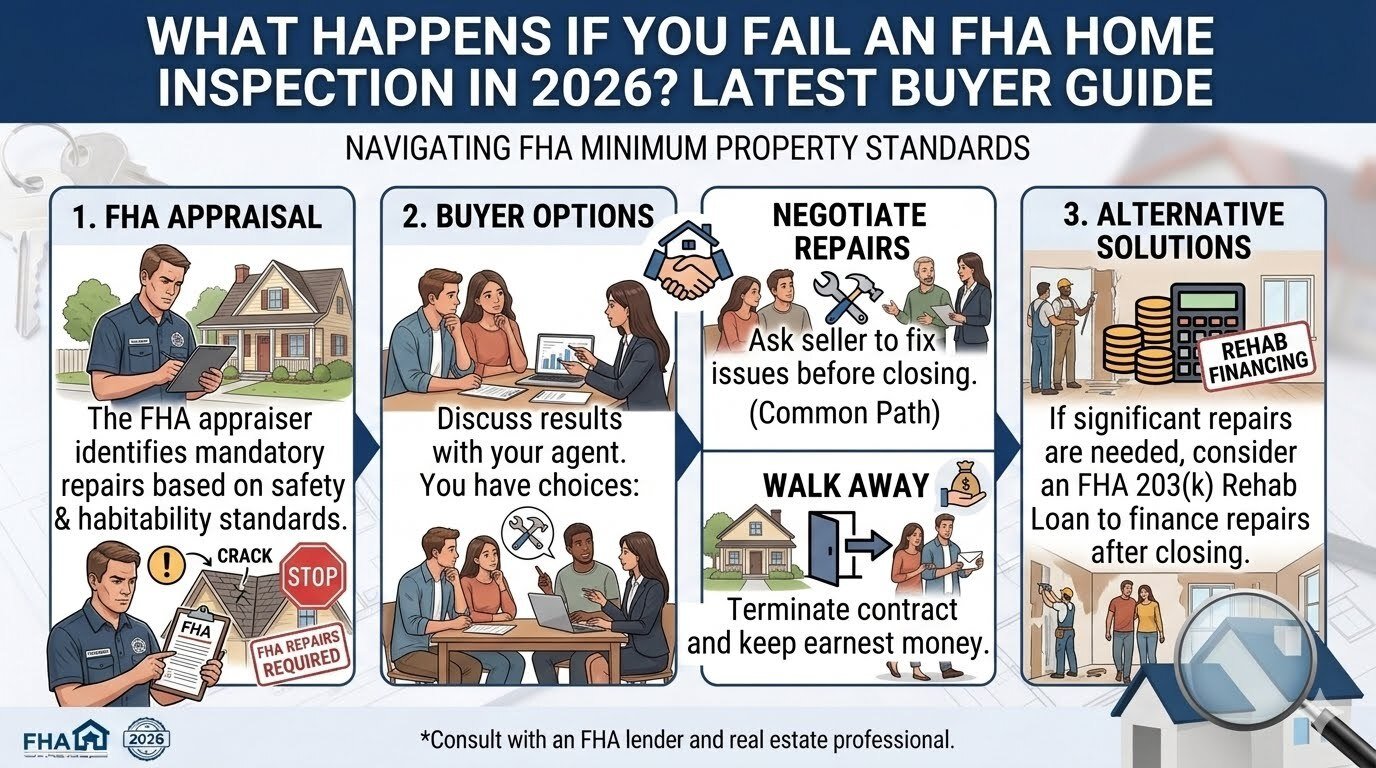

Learn what happens if you fail an FHA home inspection in 2026, including common problems, repair rules, buyer options, costs, and next steps.
What Happens If You Fail an FHA Home Inspection?
Buying a home with an FHA loan can make homeownership more accessible, especially for buyers who want flexible qualification requirements and a lower down payment. However, the property itself must meet certain standards before an FHA loan can move forward.
So, what happens if you fail an FHA home inspection?
First, it is important to understand that an FHA appraisal and a traditional home inspection are not the same thing. An FHA appraiser evaluates the property to determine its value and whether it meets basic FHA property standards. A separate home inspection is usually arranged by the buyer to identify potential problems with the home.
If the FHA appraisal identifies serious property issues, the lender may require repairs before closing. In some cases, the buyer may need to renegotiate the purchase, ask the seller to make repairs, or reconsider the property.
What Is an FHA Home Inspection?
An FHA home inspection generally refers to the inspection and property review connected with an FHA financed purchase.
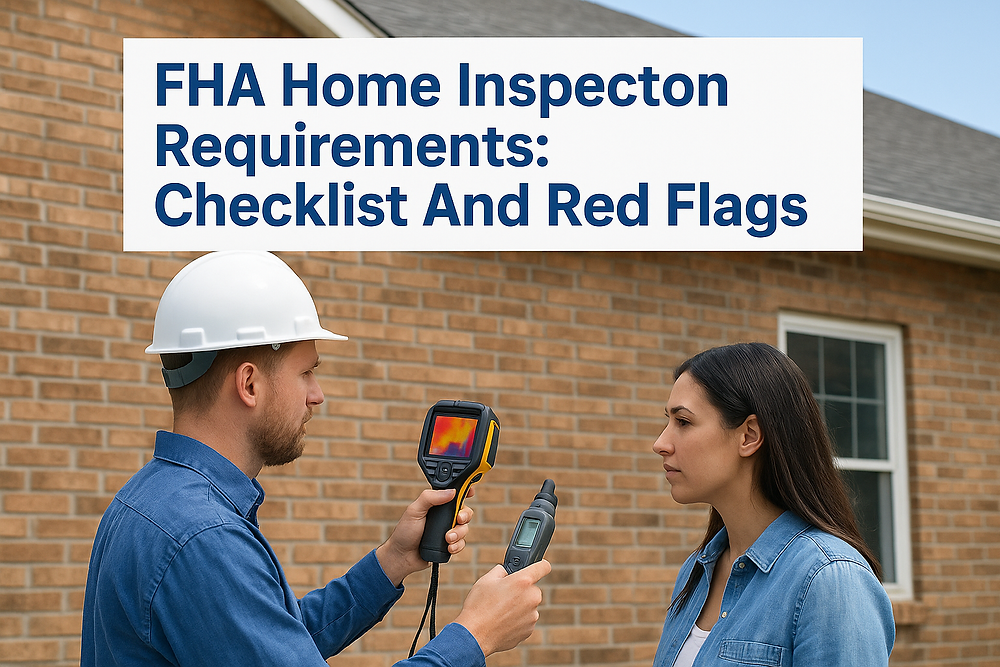
The buyer can hire a professional home inspector to examine the condition of the property. The inspector may look at the roof, foundation, plumbing, electrical systems, heating and cooling equipment, windows, doors, attic areas, and other major components.
An FHA appraiser has a different role. The appraiser determines the property’s market value and checks for conditions that could affect the safety, security, or habitability of the home.
This distinction matters because an FHA loan does not automatically require the buyer to fix every problem discovered during a private home inspection.
Common Reasons an FHA Property May Have Problems

Several property conditions can create issues during the FHA appraisal process.
1. Roof Problems
A damaged or failing roof can become a major concern. If the roof does not appear to provide adequate protection for the property, repairs may be required.
2. Electrical Issues
Exposed wiring, unsafe electrical components, or other obvious hazards can raise concerns about the property’s safety.
3. Plumbing Problems
Leaks, damaged pipes, or plumbing conditions that affect the home’s basic function may need attention before closing.
4. Structural Damage
Visible foundation problems, significant settlement, or other structural concerns can make the property difficult to approve until the issue is addressed.
5. Peeling Paint
Homes built before 1978 may receive additional attention because of potential lead based paint hazards. Deteriorated paint can require correction under applicable FHA requirements.
6. Safety Hazards
Missing handrails, damaged stairs, exposed hazards, or other conditions that could create a safety risk may need to be corrected.
7. Water Damage
Evidence of significant water intrusion, moisture damage, or conditions that could affect the property’s habitability may also create appraisal concerns.
Does Failing an FHA Inspection Mean You Cannot Buy the House?
No.
A problem with the property does not automatically mean the buyer has to walk away.
The next step depends on the type and seriousness of the problem. The lender may request additional documentation, require repairs, or ask for another professional evaluation.
In many transactions, the seller agrees to complete necessary repairs before closing.
However, buyers should not assume that every repair will automatically be paid for by the seller. The purchase contract and negotiations determine who is responsible for repairs.
Who Pays for FHA Required Repairs?
The answer depends on the transaction.
In many cases, the seller agrees to make repairs because the property needs to meet the lender’s requirements before the loan can close. Sometimes the buyer and seller negotiate a different arrangement.
A buyer should review the purchase agreement carefully and discuss repair responsibilities with their real estate agent and mortgage professional.
If the required repairs are expensive, the buyer may need to consider whether the property is still financially practical.
Can the Seller Refuse to Make FHA Repairs?
Yes, a seller can generally refuse a requested repair, depending on the terms of the purchase agreement and applicable laws.
If the seller refuses and the property cannot satisfy the lender’s requirements, the transaction could be delayed or potentially canceled.
The buyer may have several possible choices depending on the contract:
- Negotiate a different repair agreement.
- Request a price adjustment if appropriate.
- Explore whether another financing solution is possible.
- Ask whether the required repair can be completed after closing under an acceptable arrangement.
- Exercise applicable contract rights if the property cannot qualify.
Always discuss the specific situation with your real estate agent and mortgage professional before making a decision.
How Long Do FHA Repairs Take?
The repair timeline depends on the problem.
A minor issue may be corrected quickly. Major roof, structural, electrical, or plumbing work can take considerably longer.
After repairs are completed, the lender may require documentation or a follow up appraisal or inspection to confirm that the issue has been resolved.
This can delay closing, so buyers should avoid making moving arrangements based on the original closing date until the lender confirms that the property is ready.
What Should You Do If an FHA Appraisal Finds Problems?
Do not panic.
Start by asking your lender or real estate professional to explain exactly what issue was identified.
Then determine whether the problem requires repair before closing or whether additional documentation can resolve the concern.
Next, discuss the repair with the seller. If the seller agrees to fix the problem, make sure the agreement is properly documented.
After the repair is completed, provide the required documentation to the lender and wait for confirmation that the property satisfies the applicable requirements.
FHA Inspection vs Home Inspection
Understanding the difference can prevent confusion.
A private home inspection is primarily designed to help the buyer understand the condition of the property. It can uncover issues that may not be obvious during a normal showing.
An FHA appraisal is primarily connected to the lender’s evaluation of the property. The appraiser considers the property’s value and checks for conditions that could affect its eligibility under FHA requirements.
For this reason, buyers should consider getting a professional home inspection even when purchasing with an FHA loan.
Can You Negotiate Repairs After an FHA Appraisal?
Yes, repair negotiations are common in real estate transactions.
If the appraisal identifies a problem, the buyer can discuss the issue with the seller and determine whether the seller is willing to make the required repair.
Negotiations may also involve the purchase price or other terms of the transaction, depending on the circumstances and the purchase agreement.
The key is to understand exactly what the lender requires before agreeing to a solution.
How to Avoid FHA Inspection Problems
You cannot eliminate every potential problem, but you can reduce surprises.
Before making an offer, look carefully at the property’s overall condition. Pay attention to the roof, electrical systems, plumbing, foundation, windows, stairs, heating and cooling systems, and signs of water damage.
Hiring a qualified home inspector can also help you identify problems before they become closing issues.
It is also helpful to work with an experienced FHA lender and real estate professional who understands FHA property requirements.
Final Thoughts
Failing an FHA home inspection does not necessarily mean you have lost the home.
The important thing is to identify the problem, understand what the lender requires, and determine who will handle the repair. In many cases, the seller can complete the necessary work and the transaction can continue.
The biggest mistake is ignoring property problems until the last minute. A professional home inspection, careful appraisal review, and clear communication with your lender can make the FHA home buying process much smoother.
If you are considering an FHA loan in 2026, compare your financing choices and understand the property’s condition before moving toward closing.
Frequently Asked Questions
1. What happens if an FHA appraisal fails?
If an FHA appraisal identifies conditions that do not meet applicable FHA property requirements, the lender may require repairs or additional documentation before approving the loan for closing.
2. Can I still buy a house after an FHA inspection fails?
Yes. A problem does not automatically prevent you from buying the property. The issue may be resolved through repairs, additional documentation, or negotiations with the seller.
3. Who pays for FHA required repairs?
The seller often agrees to complete required repairs, but responsibility depends on the purchase agreement and negotiations between the buyer and seller.
4. What repairs are commonly required for FHA loans?
Common concerns can include serious roof damage, unsafe electrical conditions, structural problems, deteriorated paint, safety hazards, plumbing problems, and significant water damage.
5. Does FHA require a home inspection?
An FHA appraisal is part of the FHA lending process, while a separate professional home inspection is generally arranged by the buyer. A home inspection can provide valuable information about the property’s condition.
6. Can a seller refuse FHA repairs?
A seller may refuse requested repairs depending on the purchase agreement and circumstances. If required conditions cannot be resolved, the buyer may need to reconsider the transaction or financing options.
7. How long does an FHA repair take?
Simple repairs may take a short time, while major roof, structural, electrical, or plumbing repairs can take much longer. The lender may also need to verify completed repairs before closing.
8. Should I get a home inspection with an FHA loan?
Yes. A professional home inspection can help identify potential problems that may not be obvious during a property showing and can give buyers a clearer picture of the home’s condition.