
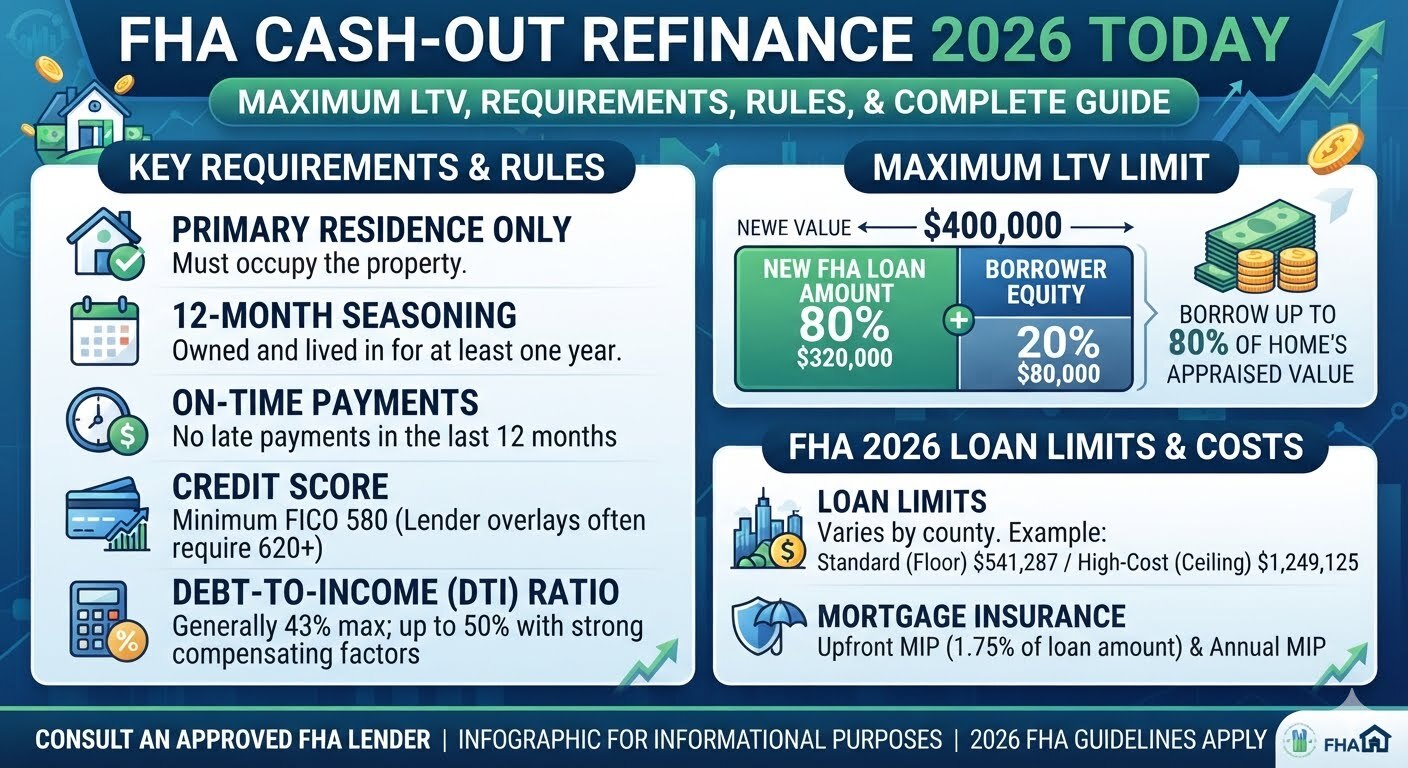

Learn FHA Cash Out Refinance 2026 rules, maximum LTV, credit score requirements, closing costs, and eligibility to refinance your home with confidence.
FHA Cash Out Refinance 2026: Maximum LTV, Requirements, Rules, and Complete Guide

If you have built equity in your home, an FHA Cash Out Refinance 2026 could help you access cash for home improvements, debt consolidation, medical expenses, education, or other financial needs.
Many homeowners are asking whether this program is still available, how much equity they need, and what the maximum loan to value ratio is in 2026. The good news is that FHA cash out refinance remains one of the most popular refinance programs because it offers flexible credit requirements and competitive mortgage rates.
This guide explains everything you need to know, including eligibility requirements, maximum LTV limits, credit score expectations, closing costs, and the refinance process.
What Is an FHA Cash Out Refinance?
An FHA Cash Out Refinance allows homeowners to replace their current mortgage with a new FHA loan while borrowing more than they currently owe. The difference between the new loan amount and the existing mortgage balance is paid to the homeowner as cash.
Many borrowers use the funds for:
- Home renovations
- Debt consolidation
- Emergency expenses
- College tuition
- Medical bills
- Major purchases
- Investment opportunities
Unlike a personal loan, this refinance uses your home equity to access funds.
FHA Cash Out Refinance 2026 Maximum LTV
One of the most important questions borrowers ask is about the FHA Cash Out Refinance maximum LTV in 2026.
Maximum Loan to Value Ratio
The FHA generally allows qualified borrowers to refinance up to 80 percent of the home’s appraised value.
For example:
- Home value: $500,000
- Maximum loan amount at 80 percent LTV: $400,000
If your current mortgage balance is $275,000, you may be able to receive approximately $125,000 before closing costs and other applicable fees.
The exact amount depends on your home appraisal, loan balance, and lender guidelines.
FHA Cash Out Refinance Requirements 2026
To qualify, borrowers typically must meet several FHA requirements.
Home Equity
You need enough equity in your home so the new mortgage remains within the maximum allowed LTV.
Credit Score
Many lenders prefer a credit score of 580 or higher, although some lenders may require a higher score based on their own lending standards.
Payment History
Borrowers should have a solid mortgage payment history with no recent serious delinquencies.
Income Verification
Lenders verify your income through documents such as:
- Pay stubs
- Tax returns
- Bank statements
- W2 forms
Debt to Income Ratio
Your monthly debt payments should fit within acceptable lender guidelines based on your income.
FHA Appraisal
An FHA approved appraisal determines the current market value of your property and confirms it meets FHA property standards.
Benefits of FHA Cash Out Refinance
Many homeowners choose this refinance because of its flexibility.
Access Home Equity
Turn your home’s equity into cash without selling your property.
Lower Interest Rate
Some borrowers may qualify for a lower mortgage rate than their current loan.
Debt Consolidation
Use the funds to pay off credit cards or personal loans with higher interest rates.
Home Improvements
Upgrade your kitchen, bathroom, roof, or other parts of your home.
Flexible Credit Guidelines
FHA loans generally have more flexible credit requirements than many conventional refinance options.
When Does an FHA Cash Out Refinance Make Sense?
This refinance may be a good option if you:
- Need cash for home improvements
- Want to consolidate expensive debt
- Have built significant home equity
- Can benefit from a better mortgage rate
- Plan to stay in your home for several years
It may not be the right choice if the refinance significantly increases your monthly payment or total borrowing costs.
FHA Cash Out Refinance Closing Costs
Like other mortgage loans, FHA cash out refinance includes closing costs.
These may include:
- Loan origination fee
- Appraisal fee
- Credit report fee
- Title charges
- Recording fees
- Government fees
- Mortgage insurance costs
Some lenders allow qualified borrowers to finance certain closing costs into the new mortgage.
FHA Cash Out Refinance Process
The refinance process is straightforward.
Step 1
Review your home equity and financial goals.
Step 2
Compare mortgage lenders and refinance rates.
Step 3
Complete a loan application.
Step 4
Provide income and financial documents.
Step 5
Schedule an FHA appraisal.
Step 6
The lender reviews your application through underwriting.
Step 7
Attend closing and receive your cash after the required waiting period.
FHA Cash Out Refinance Versus Home Equity Loan
| FHA Cash Out Refinance | Home Equity Loan |
|---|---|
| Replaces current mortgage | Keeps existing mortgage |
| One monthly payment | Two monthly payments |
| May lower interest rate | Existing rate stays the same |
| Requires full refinance | Separate loan |
| Includes FHA mortgage insurance | Does not include FHA insurance |
Choosing between these options depends on your financial goals, mortgage rate, and available home equity.
Tips Before Applying
Before starting your refinance, consider these tips.
Improve Your Credit Score
Pay bills on time and reduce credit card balances.
Reduce Existing Debt
Lower debt may improve loan approval chances.
Compare Multiple Lenders
Interest rates and fees can vary from one lender to another.
Gather Financial Documents
Having paperwork ready can help speed up approval.
Know Your Home Value
A recent estimate of your property’s value helps determine available equity.
Is FHA Cash Out Refinance Worth It in 2026?
For many homeowners, the answer is yes.
If your home has increased in value and you need access to cash, this refinance can provide an affordable way to use your equity while keeping manageable monthly payments.
However, because you are increasing your mortgage balance, it is important to borrow only what you truly need and compare offers from several lenders before making a decision.
A mortgage professional can help determine whether FHA cash out refinance or another refinance program better fits your financial goals.
Frequently Asked Questions
What is the maximum FHA Cash Out Refinance LTV in 2026?
Most qualified borrowers can refinance up to 80 percent of the home’s appraised value, subject to FHA and lender requirements.
What credit score do I need for FHA Cash Out Refinance?
Many lenders accept borrowers with a credit score of 580 or higher, although individual lender requirements may be stricter.
Can I use the cash for any purpose?
Yes. Many homeowners use the money for home improvements, debt consolidation, education expenses, medical bills, or other personal financial needs.
Does FHA Cash Out Refinance require an appraisal?
Yes. An FHA appraisal is required to determine the current market value of the home.
Can I refinance a conventional loan into an FHA loan?
Yes. Eligible borrowers may refinance a conventional mortgage into an FHA cash out refinance if they meet FHA requirements.
How long does FHA Cash Out Refinance take?
Most refinance transactions close within 30 to 45 days, although timing varies by lender and documentation.
Do I have to pay mortgage insurance?
Yes. FHA loans generally require both upfront and annual mortgage insurance premiums.
Conclusion
An FHA Cash Out Refinance 2026 can be an excellent solution for homeowners who want to access their home equity while refinancing into an FHA insured mortgage. With a maximum 80 percent loan to value ratio, flexible credit requirements, and competitive mortgage rates, this program continues to help many borrowers achieve their financial goals. Before applying, compare multiple lenders, understand the total costs, and make sure the refinance supports your long term financial plans.