

An FHA loan for a fixer-upper without a 203k is possible, but only if the home is in good enough shape to pass the FHA appraisal. A standard FHA loan, known as a 203(b), requires the home to meet HUD’s minimum property requirements before closing, which rules out broken roofs, failed heating and serious structural damage. But a home that is simply ugly, dated or worn out can often pass. This guide explains what FHA will and will not accept, and the five realistic paths to buying one without a 203k.
Why a Standard FHA Loan Rejects Most Fixer-Uppers
The problem is not the loan, it is the appraisal. Every FHA loan requires an appraisal by an FHA approved appraiser, who estimates the home’s market value and checks its condition against HUD’s minimum property requirements, or MPRs. The home must be safe, sound and secure, with a sound roof, working systems and no health hazards. A failing condition goes into the report as a required repair, and the loan cannot close until it is fixed and documented, usually with an invoice, photos or a re-inspection.
That is the key difference from a 203k loan. With a 203k, the lender appraises the home on its value after the repairs are finished, and the repair money is built into the mortgage. With a standard FHA loan, the home must already meet the standards at closing. So a house with a leaking roof, a cracked foundation, missing windows or a dead furnace will fail, and the seller is expected to fix safety problems before closing. If the seller refuses, the deal usually stalls.
Homes built before 1978 face extra scrutiny for lead paint: chipping or peeling paint must be stabilized first. See our guide on what causes an FHA appraisal to fail for the full list. The FHA rehab loan comparison explains how a 203k differs from a standard purchase loan.
What Counts as a Fixer-Upper FHA Will Still Finance
The distinction FHA draws is between condition problems and cosmetic problems. Cosmetic problems do not fail an appraisal. A home with stained carpet, peeling wallpaper, an outdated kitchen or worn cabinets can usually pass, if everything works and nothing is unsafe.
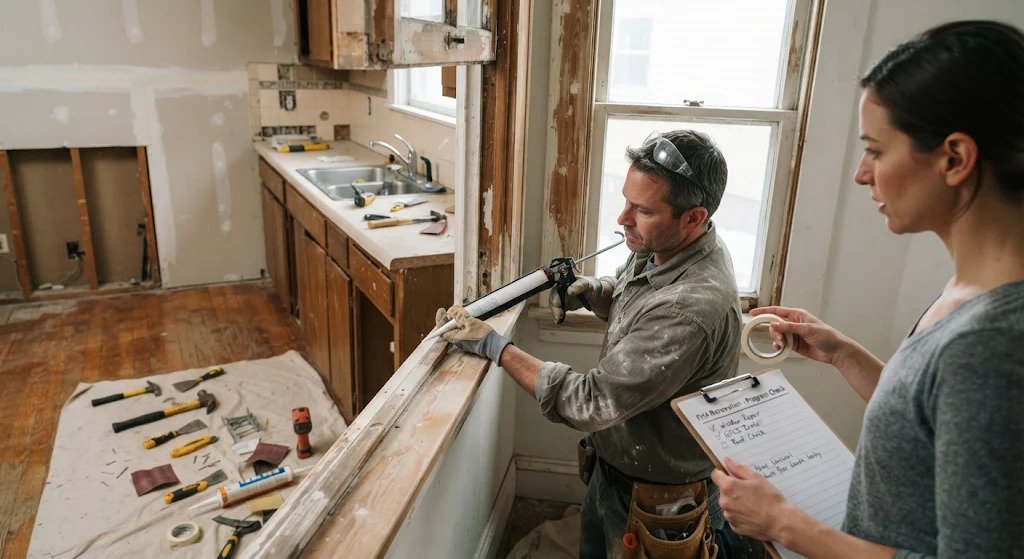
Condition problems are different. A roof at the end of its life, active leaks, a failing foundation, broken windows, missing stair handrails, exposed wiring, a dead furnace or water heater, and serious mold all draw required repairs. So will a home with no working kitchen or bathroom. Always order a private home inspection too: the appraisal is not a substitute, and it can pass a home with expensive problems the appraiser missed.
Option 1: Ask the Seller to Make Repairs Before Closing
The simplest way to buy with an FHA loan for a fixer-upper without a 203k: have the seller fix the problems before closing. This is the normal resolution when an appraisal flags required repairs: the seller hires a contractor, completes the work, and provides invoices and photos to the lender, sometimes with a re-inspection. The buyer pays nothing extra, and the loan closes on a home that now meets the standards.
This works best when the repair list is short and cheap: a few broken windows, a handrail, a small roof leak, stabilizing peeling paint. It fails when the seller is a bank selling a foreclosure as is, or an investor who will not spend another dollar. Then negotiate the price down and use an option below instead. Sellers can also contribute up to 6% of the price toward your closing costs, freeing up your cash for repairs after closing. Our FHA loan closing costs guide explains how that works.
Option 2: Use an Escrow Holdback for Small Repairs
Some lenders offer an escrow holdback, or repair escrow. The lender closes even though a small repair is unfinished, and holds back part of the loan funds, often one and a half times the estimated repair cost, until the work is done. You move in, the contractor finishes within the agreed window of 30 to 90 days, and the lender releases the money.
Holdbacks suit minor items like exterior painting in winter. They are not a way to finance a major renovation: most lenders cap the holdback at a few thousand dollars, and not every lender offers the program. Ask your lender early whether they do holdbacks and what their cap is, because finding out at the appraisal stage is usually too late.
Option 3: Buy Now, Fix Later with an FHA Title 1 Loan
The FHA Title 1 Property Improvement Loan is the most overlooked fixer-upper tool. It is a separate FHA insured loan for repairs on a home you already own, capped at $25,000 for a single family home, and unlike a 203k it is not part of your mortgage. You buy with a standard FHA loan, move in, then apply for a Title 1 loan for the roof, furnace, kitchen or bathroom work.
Title 1 has unusually flexible rules. You do not need equity in the home, and no appraisal is required. HUD sets no minimum credit score, although your lender will set its own. The home must have been completed and occupied for at least 90 days. Loans of $7,500 or less can even be unsecured. The work must protect or improve the basic livability of the property and be permanent, so a new roof, siding, furnace or rewiring qualifies, while a swimming pool does not. The FHA Title 1 loan guide has the current limits and eligible repairs.
With an FHA loan for a fixer-upper without a 203k, buy a home that passes the FHA appraisal, live in it, then use a Title 1 loan for the bigger jobs. One caution: Title 1 is a second loan with its own monthly payment, so check your budget can carry both before you commit.
Option 4: Buy with a Conventional Loan, Then Refinance
If the home cannot pass an FHA appraisal, an FHA loan for a fixer-upper without a 203k will not work, but a conventional loan may still work. Conventional appraisals are generally less strict about condition, so a home with cosmetic damage and deferred maintenance can pass one even when it fails an FHA appraisal. You buy conventional, fix the property, then refinance into an FHA loan or stay conventional.
This route has trade offs. Conventional loans usually want a higher credit score and a larger down payment, and private mortgage insurance is priced by credit score, so it costs more for lower scores. But with decent credit and 5% or more down, it can be the fastest way to buy a true fixer-upper. Compare the total monthly payment on both loan types first: a home which fails FHA standards badly may also struggle with a conventional appraisal. Get a contractor’s estimate before you commit.
Option 5: Cash, Savings and Sweat Equity
The lowest cost way to buy with an FHA loan for a fixer-upper without a 203k is the oldest: buy a home that passes the FHA appraisal, then fix it up gradually with your own money and labor. Cosmetic work such as painting, flooring, fixtures and landscaping is cheap when you do it yourself, and you can spread it over months. Sellers can contribute up to 6% toward your closing costs, leaving more of your savings for the first round of improvements.
Be honest about your skills and budget first. A $25,000 kitchen is not a weekend project, and living in a house mid renovation wears on most people. Get written bids for anything structural, electrical or plumbing, and add 20% to every estimate for surprises. If the total repair bill is more than you can fund within a year or two, a 203k may be cheaper and safer, even with its extra paperwork. Our 203k vs standard FHA loan comparison explains when the renovation loan wins.
FHA Loan for a Fixer-Upper Without a 203k: Which Option Fits?
| Option | Best for | Limit to know |
|---|---|---|
| Seller repairs | Short, cheap repair list | Seller must agree and pay |
| Escrow holdback | One small unfinished repair | Usually a few thousand dollars |
| FHA Title 1 loan after purchase | Bigger jobs on a home you own | Up to $25,000, second monthly payment |
| Conventional loan | Home fails FHA appraisal | Needs better credit, more down |
| Cash and sweat equity | Cosmetic work over time | Your savings set the pace |
One note on the 203k: the Limited 203k covers cosmetic and non structural repairs up to $75,000, raised from $35,000 in November 2024, and work must finish within nine months. The Standard 203k handles structural work, needs at least $5,000 in repairs, and requires a HUD approved consultant. If repairs top $25,000 and the home cannot pass an FHA appraisal, the 203k is usually the right answer. This fixer-upper with an FHA loan guide sets out the Limited and Standard 203k rules.
FHA Loan for a Fixer-Upper Without a 203k: A Step by Step Plan
Start an FHA loan for a fixer-upper without a 203k with preapproval to learn your price range and your lender’s rules. Then look only at homes likely to pass an FHA appraisal: sound roof, working heat and water, no structural damage. Walk every candidate with a contractor or inspector, get written bids, and keep a contingency for what you cannot see.
Make your offer with an FHA appraisal contingency and ask the seller to complete short repair lists before closing. Order a private home inspection as well as the appraisal, and read both carefully. If the appraisal flags repairs, decide with your lender whether the seller will fix them, a holdback covers them, or you walk away. Once you close, line up the Title 1 loan or your savings, and do livability jobs first: roof, heat, water, electrical and safety. Cosmetic upgrades can wait. Our FHA loan requirements guide covers the credit, income and down payment rules.
FAQs
Can you get an FHA loan for a fixer-upper without a 203k?
Yes, if the home meets FHA minimum property requirements at closing. Ugly or dated is fine if the home is safe, sound and secure. Structural damage or failed systems will fail unless the seller fixes them.
What repairs will fail an FHA appraisal?
A failing roof, cracked foundation, broken windows, missing stair rails, exposed wiring, a dead furnace or water heater, active leaks, serious mold, and chipping paint on pre-1978 homes.
What is an FHA escrow holdback?
The lender closes with a small repair unfinished and holds back part of the loan funds, often 1.5 times the repair cost, until the work is done, usually within 30 to 90 days.
What is an FHA Title 1 loan?
A separate FHA insured home improvement loan up to $25,000 for a home you already own. It needs no equity and no appraisal, and HUD sets no minimum credit score.
How much can you borrow with a 203k Limited loan?
Up to $75,000, raised from $35,000 by HUD in November 2024. The work must be cosmetic or non structural and finished within nine months.
Can the seller pay for repairs before closing on an FHA loan?
Yes, and the seller provides invoices and photos. Sellers can also contribute up to 6% of the price toward your closing costs.
Can I buy a foreclosure with a standard FHA loan?
Only if the home meets FHA minimum property requirements. Many bank owned foreclosures are sold as is and fail.
Does a fixer-upper need a home inspection with an FHA loan?
FHA does not require one, but always get one. The appraisal checks value and minimum standards, not the full condition of the home.
What credit score do I need for an FHA loan on a fixer-upper?
For an FHA loan for a fixer-upper without a 203k, the same rules apply as any FHA loan: 580 or higher for 3.5% down, or 500 to 579 with 10% down.
Is a 203k loan better than buying without one?
For an FHA loan for a fixer-upper without a 203k, it depends on the repair bill. If the home cannot pass an FHA appraisal and repairs top $25,000, a 203k is usually better. If the home passes and the work is cosmetic, skipping the 203k is simpler.
#FHAFixerUpper #FHALoan #FixerUpper #FHA203k #FHAAppraisal #Title1Loan






