


Documents You Need for an FHA Loan Application usually include identification, Social Security information, income and employment records, bank statements, asset documentation, debt information, and tax documents when applicable. The exact checklist can change based on how you earn income, where your down payment comes from, and the property you are buying.
An FHA mortgage is not a loan directly made by the Federal Housing Administration. Instead, FHA insures qualifying mortgages made by approved lenders. That means your lender still has to verify your financial information and determine whether the loan meets FHA requirements as well as the lender’s own underwriting standards. HUD’s FHA Single Family Housing Policy Handbook 4000.1 is the primary source for FHA policy, and HUD published an updated version on August 12, 2026.
The easiest way to think about an FHA Loan Application is this: every document should help the lender answer one of four questions—Who are you? How do you earn money? Where are your funds coming from? Can you repay the mortgage?
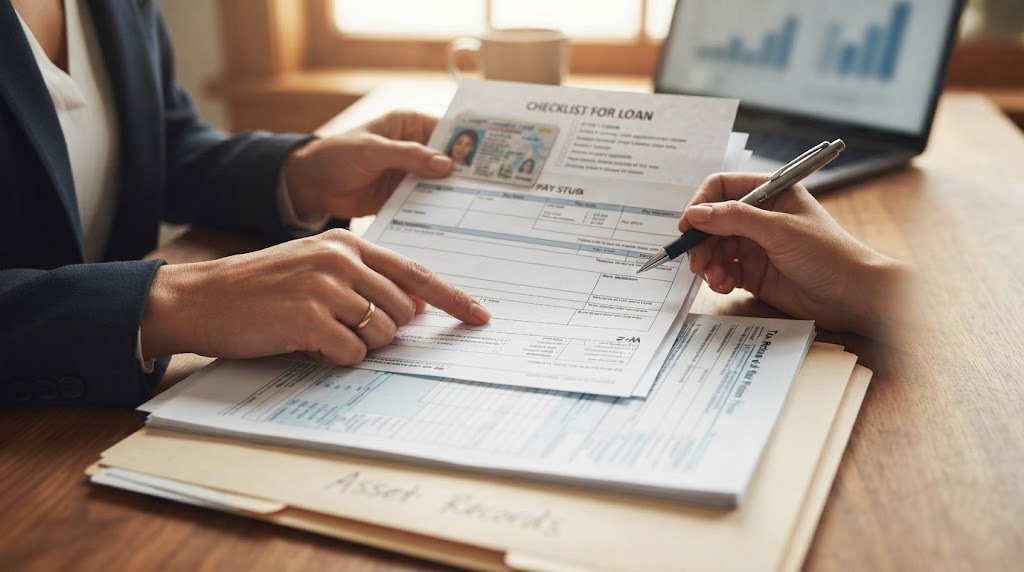
What Documents Do You Need for an FHA Loan Application?
Most FHA borrowers should prepare a basic document package before applying. Your lender may request additional records after reviewing your initial application.
1. Government-Issued Identification
Expect to provide a valid form of identification, such as:
- Driver’s license
- State-issued identification card
- Passport or another acceptable government-issued ID
Your lender uses identification to verify your identity and match your application information with your credit and financial records.
You will generally also provide your Social Security number because it is used as part of the mortgage application and credit-report process.
2. Proof of Income
Income documentation is one of the most important parts of an FHA mortgage application because the lender needs to establish qualifying income and determine whether the mortgage payment is affordable.
For a typical W-2 employee, prepare:
- Recent pay stubs
- W-2 forms
- Employment information
- Documentation of other income, if applicable
The lender may also verify your employment directly. Current FHA guidance includes specific requirements for documenting employment and income, and HUD’s 2026 handbook update added definitions concerning written, electronic, and reverification of employment.
3. Bank Statements
Bank statements show the lender where your available funds are held and help verify money being used for the transaction.
Depending on your lender and circumstances, you may need recent statements for:
- Checking accounts
- Savings accounts
- Money market accounts
- Other accounts containing funds needed for closing
A common mistake is submitting only the page showing the account balance. Lenders may need complete statements, including transaction activity and all pages.
Be prepared to explain unusual or significant deposits. For example, if your account suddenly receives a $15,000 deposit shortly before your FHA Loan Application, the lender may need documentation showing where the money came from.
This is one area where preparation can prevent unnecessary back-and-forth during underwriting.
4. Proof of Assets
If you are using savings, investments, retirement funds, or other eligible assets to qualify or close the transaction, your lender may request statements showing those assets.
Potential documentation includes:
- Savings account statements
- Investment account statements
- Retirement account statements
- Other eligible asset records
- Documentation showing the source of funds
The lender needs to establish that the money being used for the transaction is properly sourced and acceptable under the applicable mortgage requirements.
5. Tax Returns When Required
Not every FHA borrower will need the same tax documentation.
Tax returns can become particularly important when you are:
- Self-employed
- A business owner
- Receiving certain types of variable income
- Reporting rental income
- Using income that requires additional verification
Self-employed borrowers should be prepared for a more detailed review. Depending on the circumstances, the lender may request personal and business tax returns, profit-and-loss information, business records, or other documentation.
Do not assume that being self-employed automatically disqualifies you from an FHA mortgage. The issue is whether your income can be properly documented and meets the applicable requirements.
Which Documents Are Needed for Different Income Situations?
One of the biggest weaknesses in basic FHA document checklists is that they often treat every borrower as if they has the same financial situation.
In reality, your document package depends heavily on how you earn your money.
W-2 Employees
A straightforward W-2 borrower will commonly start with:
- Government-issued ID
- Social Security number
- Recent pay stubs
- W-2 forms
- Recent bank statements
- Information about debts and monthly obligations
- Documentation for additional income, if applicable
Your lender may request additional employment verification or explanations if your employment history contains gaps or your income recently changed.
Self-Employed Borrowers
Self-employed borrowers often need more documentation because the lender must understand both personal income and business finances.
Potential documents include:
- Personal federal tax returns
- Business tax returns
- Profit-and-loss statements
- Business financial statements
- 1099 forms
- K-1s, when applicable
- Business bank statements
- Documentation of business ownership
The exact requirements depend on the borrower’s business structure, income history, and the type of income being used to qualify.
Borrowers With Commission, Bonus, or Variable Income
If part of your income comes from commissions, bonuses, overtime, tips, or another variable source, expect the lender to request additional documentation.
Possible records include:
- Pay history
- Employer verification
- W-2s
- Tax returns
- Documentation supporting the income history
The key issue is not simply how much you earned last month. The lender needs to determine whether the income meets FHA requirements for qualifying income.
Borrowers Receiving Rental Income
Rental income can require additional documentation, especially when you own other real estate.
You may need:
- Current lease agreements
- Tax returns
- Rental income records
- Mortgage statements for other properties
- Property-related documentation
Tell your loan officer about all properties you own early in the FHA Loan Application process rather than waiting until underwriting discovers them.
What Documents Are Needed for the FHA Down Payment and Gift Funds?
An FHA mortgage can allow a down payment as low as 3.5% for borrowers who meet the applicable credit requirements. HUD materials confirm the 3.5% minimum for borrowers with credit scores of 580 or higher; lender requirements can be more restrictive.
But having the money is only part of the equation. The lender may also need to verify the source of the money.
If your down payment comes from your own savings, fha bank statements may help establish the funds.
If someone gives you money toward the purchase, additional documentation may be required.
Gift Funds
If a family member or another permitted donor provides gift funds, you may need:
- A gift letter
- Evidence of the transfer
- Documentation from the donor
- Bank records showing the movement of funds
The exact requirements depend on the transaction and applicable FHA and lender rules.
Down Payment Assistance
If you receive money through a down payment assistance program, the lender may request:
- Program approval documentation
- Assistance agreement
- Evidence of the funds
- Documentation showing the terms of the assistance
Tell your lender about assistance programs before moving money between accounts so the source can be documented correctly.
What About Credit, Debts, and Other Financial Records?
You generally do not need to provide your own credit report because the lender will obtain and review credit information as part of the mortgage process.
However, you should be ready to provide information about your financial obligations, including:
- Credit cards
- Auto loans
- Student loans
- Personal loans
- Other mortgages
- Child support or alimony obligations when applicable
Your lender evaluates your debts alongside your income when calculating your debt-to-income ratio.
You may also be asked for documentation when the credit report contains information that needs clarification, such as disputed accounts, recent debts, judgments, or payment-history issues.

What Additional Documents Might an FHA Lender Request?
Your initial checklist is not necessarily your final checklist.
During underwriting, the lender may identify something that requires clarification. Additional documentation might include:
- Explanation letters
- Proof of employment changes
- Documentation of employment gaps
- Divorce or separation documents
- Child support documentation
- Bankruptcy or foreclosure records
- Gift letters
- Documentation for large deposits
- Rental agreements
- Statements for other mortgages
- Proof of insurance
- Purchase agreement
- Appraisal-related documents
This is normal. Mortgage underwriting is designed to verify the information provided during the application.
A useful rule is: if something on your application looks unusual compared with your normal financial history, expect the lender to ask about it.
For example, imagine a borrower normally receives $4,500 in monthly payroll deposits but suddenly deposits $20,000 in cash two weeks before applying. The borrower may have perfectly legitimate reasons for the money, but the lender still needs a documented source. Having a sale receipt, transfer record, gift documentation, or other acceptable evidence available can prevent the deposit from becoming an underwriting mystery.
That simple preparation step can be more valuable than creating a giant folder of documents you may never need.
How Should You Organize Your FHA Loan Documents?
The best document package is not necessarily the biggest one. It is the one that is complete, current, readable, and easy to verify.
Create a digital mortgage folder with sections such as:
- Identity — ID and personal information
- Employment — pay stubs, W-2s, employment records
- Banking — checking and savings statements
- Assets — investment and retirement statements
- Taxes — tax returns and supporting records
- Debts — statements for major obligations
- Funds — gift, assistance, or other source documentation
- Property — purchase agreement and property information
Use the original PDF statements from your financial institutions whenever possible rather than screenshots that omit important information.
Also avoid editing, cropping, or combining documents in ways that remove pages, account information, dates, or transaction details.
A Practical 2026 Preparation Tip
Start collecting documents before you find a house.
That does not mean you need every possible document. Instead, gather the core items first: identification, income records, recent bank statements, asset information, and tax documents if applicable.
Then ask your lender what is missing based on your specific situation.
This approach is more efficient than sending dozens of unrelated documents and hoping the lender can determine which ones matter.
What Happens After You Submit Your FHA Loan Application?
Once you submit the required information, the lender reviews your application and supporting documentation.
The process may include:
- Application and initial document collection
- Credit review
- Income and employment verification
- Asset and fund verification
- Underwriting
- Property appraisal
- Requests for additional documentation
- Final approval or conditions
- Closing
An FHA appraisal is also important because the property must meet applicable FHA property standards. FHA-insured properties are evaluated for safety, security, and structural soundness, and required repairs can sometimes affect the transaction.
The documentation stage does not necessarily end after your first submission. If your financial circumstances change, the lender may need updated records.
What Is the Most Important FHA Document Checklist?
For a typical borrower, use this starting checklist:
Identity
- Government-issued ID
- Social Security number
Employment and income
- Recent pay stubs
- W-2 forms
- Employment information
- Additional income documentation when applicable
Assets
- Recent bank statements
- Savings and investment statements
- Retirement account information when relevant
Taxes
- Tax returns when required
- Business tax documents for applicable self-employed borrowers
Debts
- Information about credit cards
- Auto loans
- Student loans
- Other recurring debts
Source of funds
- Gift letter if applicable
- Down payment assistance documentation if applicable
- Documentation for unusual or large deposits
Property
- Purchase agreement once under contract
- Property and appraisal documentation as requested
Remember that this is a preparation checklist, not a universal FHA underwriting checklist. Your lender may request more or fewer documents depending on your circumstances.
What Are the FHA Loan Application Requirements in 2026?
Documentation is only one part of qualifying for an FHA mortgage.
FHA loans generally offer more flexible qualification standards than some conventional mortgages, but borrowers still need to demonstrate sufficient income, acceptable credit history, manageable debt, appropriate funds, and an eligible property.
FHA loans can also involve mortgage insurance premiums, and FHA loan limits vary by location and property type.
For the most current program requirements, use HUD’s FHA Single Family Housing Policy Handbook rather than relying on an old blog checklist. HUD identifies Handbook 4000.1 as its comprehensive FHA policy source and published an update on August 12, 2026.
What Mortgage Documents Will You Receive During the Process?
Your responsibilities do not end when you submit your paperwork. You will also receive important mortgage disclosures.
For most covered mortgage transactions, the CFPB says the lender must provide a Loan Estimate within three business days after receiving the six key pieces of application information.
The Loan Estimate helps you review:
- Estimated interest rate
- Monthly payment
- Closing costs
- Taxes and insurance
- Other loan terms
Later in the process, you should receive a Closing Disclosure showing the final terms and closing costs. The CFPB states that borrowers generally must receive the Closing Disclosure at least three business days before closing.
Do not treat these disclosures as paperwork to sign without reading. Compare the numbers with what you expected and ask questions about anything that changed.
Final FHA Loan Document Checklist
Before submitting your FHA Loan Application, make sure you can answer “yes” to these questions:
- Do I have a valid government-issued ID?
- Do I have my Social Security information available?
- Can I document my current income?
- Do I have recent bank statements?
- Can I explain large or unusual deposits?
- Do I have documentation for other assets being used?
- Do I have tax documents if my income situation requires them?
- Have I disclosed my major debts and other properties?
- Can I document gift funds or assistance funds if applicable?
- Have I told my lender about self-employment, commission income, rental income, or employment gaps?
- Am I prepared to provide additional documents during underwriting?
If you can organize these items before applying, you can make the FHA mortgage process much easier to navigate.
The goal is not to overwhelm yourself with paperwork. The goal is to give the lender a clear, verifiable picture of your identity, income, assets, debts, and source of funds.

FAQ: FHA Loan Application Documents
What documents do I need for an FHA Loan Application?
Most borrowers should prepare a government-issued ID, Social Security information, recent pay stubs, W-2s, bank statements, asset information, and debt details. Additional documents may be required based on your income, employment, assets, and property.
How many bank statements do I need for an FHA loan?
The exact number depends on the lender and your circumstances. Many lenders request recent statements covering the accounts used for the transaction. Ask your lender for the exact period required and provide complete statements rather than selected screenshots or pages.
Do self-employed borrowers need tax returns for an FHA loan?
Self-employed borrowers may need additional documentation, including personal and business tax returns, profit-and-loss statements, and other business records. Requirements depend on the borrower’s circumstances and the income being used to qualify.
Can I use gift money for an FHA down payment?
Gift funds may be permitted when they meet applicable FHA and lender requirements. The lender may require a gift letter and documentation showing the source and transfer of the funds.
Why does an FHA lender ask about large bank deposits?
Large or unusual deposits may need to be documented so the lender can verify the source of the money. If you receive a large transfer, gift, sale proceeds, or other significant deposit, keep records that clearly establish where the funds came from.
Can the lender ask for more documents after I apply?
Yes. Underwriting can reveal information that requires clarification or additional verification. Your lender may request updated pay stubs, bank statements, explanations, employment documentation, gift documentation, or other records before final approval.







One Response