

Learn what FHA mortgage insurance is, how much it costs, how long you pay it, and when it can be removed. Complete FHA guide for home buyers in 2026.
What Is FHA Mortgage Insurance and How Long Do You Pay It?
Buying a home with an FHA loan can make homeownership more affordable, especially if you have a lower credit score or limited savings. One important cost to understand before applying is FHA mortgage insurance.
Many buyers ask, What is FHA mortgage insurance and how long do you pay it? The answer depends on your down payment, loan term, and when your FHA loan was issued.
This guide explains everything you need to know about FHA mortgage insurance in simple language so you can make an informed decision before purchasing a home.
What Is FHA Mortgage Insurance?

FHA mortgage insurance is a fee required on all FHA home loans. It protects the lender if a borrower stops making mortgage payments.
Unlike private mortgage insurance used with conventional loans, FHA mortgage insurance is required regardless of your credit score or down payment amount.
The insurance allows lenders to offer loans with lower down payments and more flexible qualification requirements.
Why Does FHA Mortgage Insurance Exist?
The Federal Housing Administration insures approved lenders against financial losses. Because lenders take less risk, they can approve borrowers who may not qualify for conventional financing.
Benefits include:
- Lower credit score requirements
- Down payment as low as 3.5 percent
- Flexible debt to income guidelines
- Competitive interest rates
- Easier qualification for many home buyers
Types of FHA Mortgage Insurance
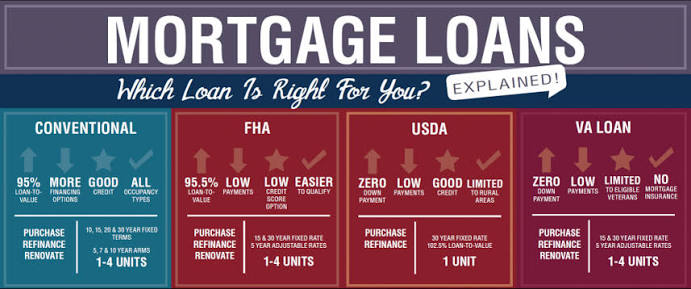
There are two types of FHA mortgage insurance.
Upfront Mortgage Insurance Premium
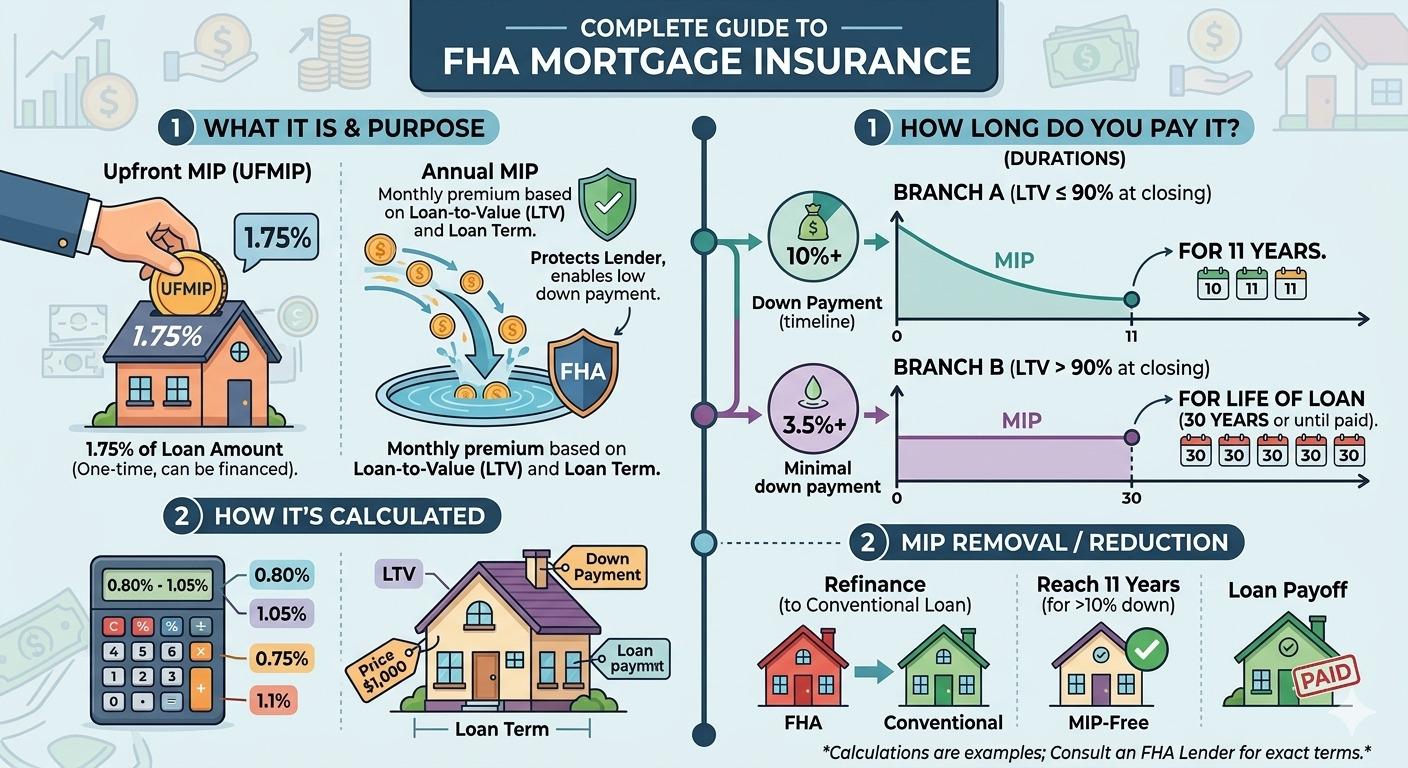
The Upfront Mortgage Insurance Premium, often called UFMIP, is paid when your loan closes.
Most borrowers pay 1.75 percent of the loan amount.
This cost can be:
- Paid at closing
- Added into the mortgage balance
Many buyers choose to finance this amount instead of paying it out of pocket.
Annual Mortgage Insurance Premium
The Annual Mortgage Insurance Premium is paid every year but collected monthly as part of your mortgage payment.
The exact cost depends on:
- Loan amount
- Down payment
- Loan term
- Current FHA insurance rates
How Long Do You Pay FHA Mortgage Insurance?
This is one of the most common questions among FHA borrowers.
The answer depends on your original down payment.
Down Payment Less Than 10 Percent
If your down payment is less than 10 percent, you will generally pay FHA mortgage insurance for the life of the loan.
This means the insurance remains until you refinance into another eligible loan or pay off your mortgage.
Down Payment of 10 Percent or More
If you put down at least 10 percent, FHA mortgage insurance generally lasts for 11 years.
After that period, the annual mortgage insurance ends automatically if your loan remains in good standing.
Can FHA Mortgage Insurance Be Removed?
Unlike many conventional loans, FHA mortgage insurance usually does not disappear when you build enough home equity.
Most homeowners remove FHA mortgage insurance by refinancing into a conventional mortgage once they:
- Build at least 20 percent equity
- Meet conventional loan requirements
- Have a qualifying credit score
- Can obtain a competitive interest rate
Refinancing may reduce your monthly payment if market conditions are favorable.
How Much Does FHA Mortgage Insurance Cost?
The exact cost depends on your loan details.
Typical costs include:
Upfront Premium
- 1.75 percent of the loan amount
Example:
A $300,000 FHA loan would have an upfront premium of about $5,250.
Annual Premium
Annual mortgage insurance varies depending on:
- Loan size
- Loan term
- Down payment
- Current FHA guidelines
Your lender will provide an exact estimate before closing.
FHA Mortgage Insurance vs Private Mortgage Insurance
Many buyers compare FHA mortgage insurance with private mortgage insurance used on conventional loans.
FHA Mortgage Insurance
- Required on every FHA loan
- Includes upfront and annual premiums
- May remain for the life of the loan
- Backed by the Federal Housing Administration
Private Mortgage Insurance
- Used with conventional loans
- Usually required with less than 20 percent down
- Can often be removed after reaching enough home equity
- Does not require an upfront insurance premium
Understanding these differences can help you choose the best loan program.
Is FHA Mortgage Insurance Worth It?
For many buyers, the answer is yes.
Although mortgage insurance adds to your monthly payment, FHA loans can provide access to homeownership much sooner.
FHA loans are especially helpful for buyers who:
- Have moderate credit scores
- Have limited savings
- Need a lower down payment
- Want flexible qualification requirements
If you plan to refinance later, FHA mortgage insurance may be a worthwhile trade off.
Tips to Reduce FHA Mortgage Insurance Costs
You may be able to lower your overall costs by following these strategies.
Make a Larger Down Payment
A down payment of at least 10 percent shortens the mortgage insurance period.
Improve Your Credit Score
A stronger credit score may help you qualify for a conventional refinance sooner.
Build Home Equity
As your home’s value increases and your loan balance decreases, refinancing may become more beneficial.
Compare Refinance Options
Review conventional loan options regularly to determine whether removing FHA mortgage insurance makes financial sense.
Should You Choose an FHA Loan?
An FHA loan may be the right choice if you want:
- Lower upfront costs
- Easier loan approval
- Smaller down payment
- Flexible lending requirements
However, if you expect to build equity quickly or already have excellent credit, a conventional loan could save money over the long term.
Always compare your financing options before making a final decision.
Conclusion
Understanding what FHA mortgage insurance is and how long you pay it is essential before choosing an FHA loan.
Every FHA borrower pays an upfront mortgage insurance premium, and most also pay monthly mortgage insurance. If your down payment is less than 10 percent, the insurance generally remains for the life of the loan. If your down payment is 10 percent or more, it usually ends after 11 years.
Knowing these rules helps you estimate your monthly housing costs and plan for future refinancing opportunities. By comparing loan programs and working with an experienced mortgage professional, you can choose the financing option that best fits your goals.
Frequently Asked Questions
What is FHA mortgage insurance?
FHA mortgage insurance protects lenders if a borrower defaults on an FHA home loan. It is required on all FHA loans.
How long do you pay FHA mortgage insurance?
Borrowers with less than 10 percent down generally pay for the life of the loan. Those with at least 10 percent down usually pay for 11 years.
Can FHA mortgage insurance be removed?
In many cases, it can only be removed by refinancing into a conventional mortgage that meets lender requirements.
Is FHA mortgage insurance the same as private mortgage insurance?
No. FHA mortgage insurance applies to FHA loans, while private mortgage insurance is used with many conventional loans.
Does everyone pay the upfront FHA mortgage insurance premium?
Most FHA borrowers pay an upfront premium equal to 1.75 percent of the loan amount.
Can I avoid FHA mortgage insurance?
Not with a standard FHA loan. If avoiding mortgage insurance is important, you may qualify for a conventional loan with sufficient down payment and credit.
Does FHA mortgage insurance lower my interest rate?
Mortgage insurance itself does not lower your interest rate, but FHA loans often offer competitive rates because they are government insured.
Is refinancing the best way to remove FHA mortgage insurance?
For many homeowners, refinancing into a conventional loan after building sufficient equity is the most common way to eliminate FHA mortgage insurance.