
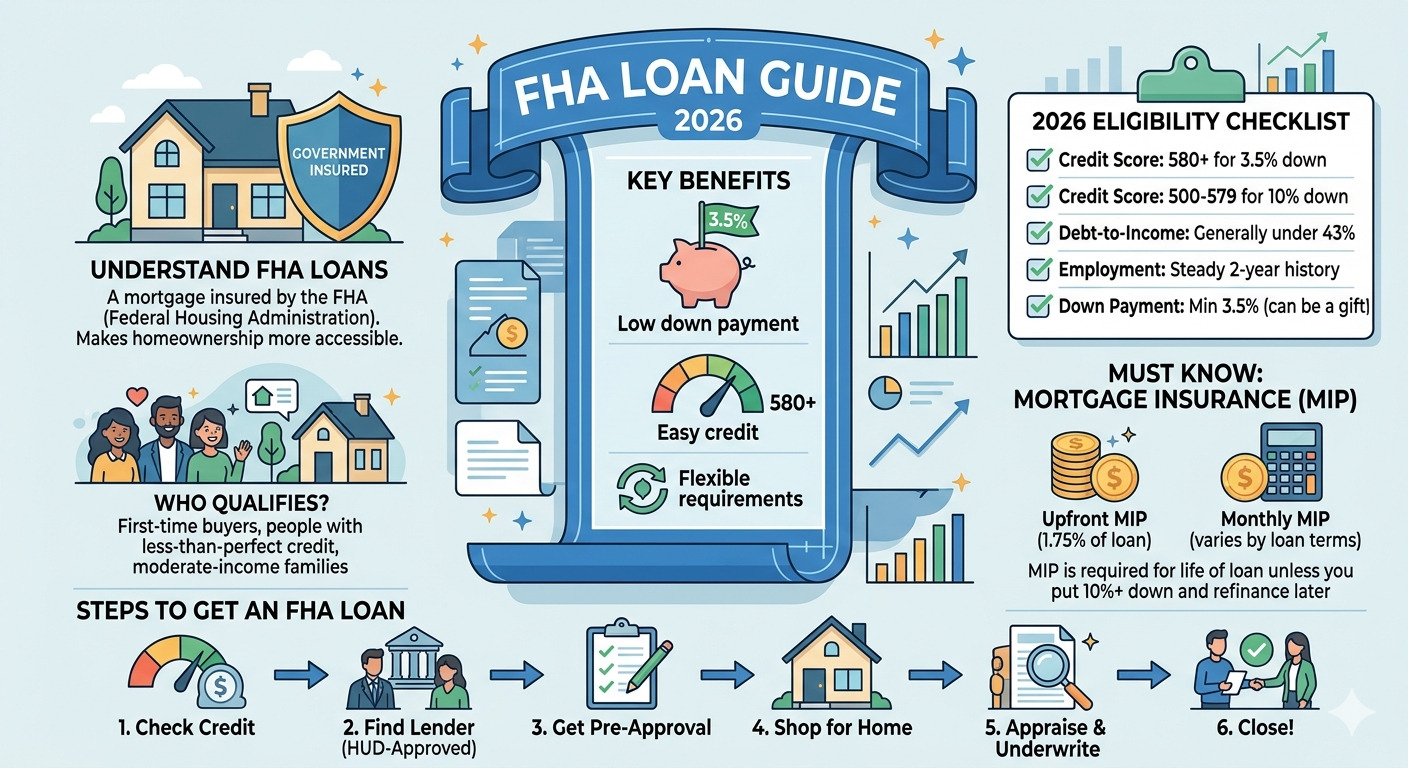

Discover what an FHA loan is, how it works, eligibility requirements, benefits, costs, and how to qualify for an FHA home loan in 2026.
Introduction
Buying a home is one of the biggest financial decisions most people will ever make. However, many aspiring homeowners worry about high down payments, strict credit requirements, and the challenge of qualifying for a mortgage. Fortunately, an FHA loan can make homeownership more accessible.
An FHA loan is one of the most popular mortgage options for first time home buyers and individuals with limited savings. Backed by the Federal Housing Administration, these loans offer flexible qualification requirements and lower down payment options compared to many conventional mortgages.
In this complete beginner’s guide, you will learn everything you need to know about FHA loans in 2026, including how they work, their benefits, eligibility requirements, costs, and whether they are the right choice for your home buying journey.
What Is an FHA Loan?
An FHA loan is a mortgage insured by the Federal Housing Administration. The FHA was established to help more Americans achieve homeownership by reducing the risk for lenders.
Unlike traditional mortgages, the FHA does not provide loans directly. Instead, approved lenders issue the mortgage, and the FHA insures the loan. This insurance gives lenders greater confidence when approving borrowers who may not qualify for conventional financing.
Because of this government backing, FHA loans often come with:
- Lower down payment requirements
- More flexible credit score standards
- Competitive interest rates
- Easier approval processes
These features make FHA loans particularly attractive to first time buyers and borrowers rebuilding their credit.
How Does an FHA Loan Work?

When you apply for an FHA loan, a lender evaluates your financial situation, including your income, credit history, employment record, and existing debts.
If approved, the lender provides the mortgage funds. In return, borrowers must pay mortgage insurance premiums that protect the lender if the loan goes into default.
The Home Loan Guide you purchase serves as collateral for the loan. As long as you make your monthly payments, you continue building equity in the property.
FHA loans can be used to purchase:
- Single family homes
- Approved condominiums
- Duplexes
- Triplexes
- Four unit residential properties
The property must generally be your primary residence.
FHA Loan Requirements in 2026
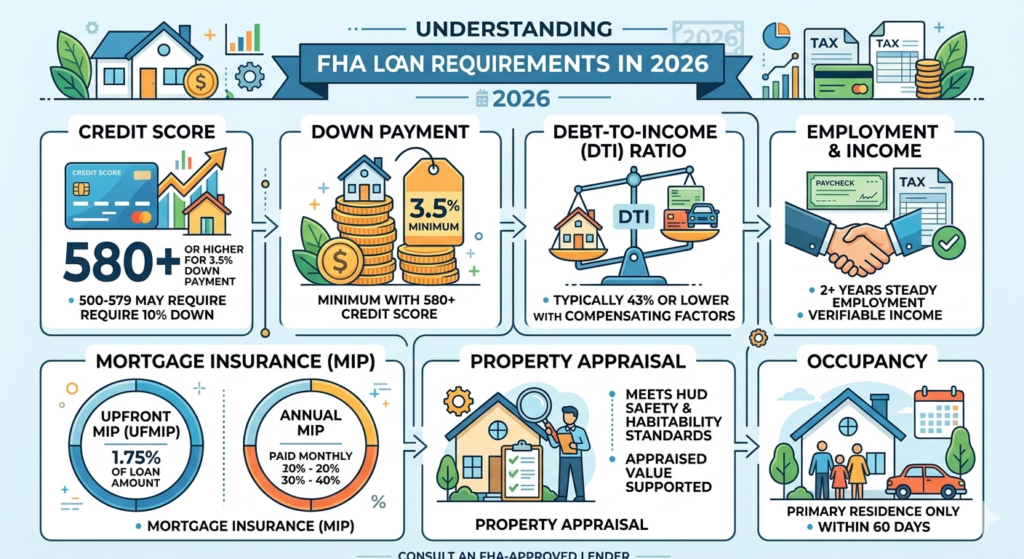
Credit Score Requirements
One of the biggest advantages of FHA loans is their flexible credit standards.
Generally:
- A credit score of 580 or higher qualifies for a 3.5 percent down payment.
- A credit score between 500 and 579 may qualify with a 10 percent down payment.
Some lenders may set higher minimum credit score requirements based on their own lending guidelines.
Down Payment Requirements
FHA loans are known for requiring less money upfront than many conventional mortgages.
Typical requirements include:
- 3.5 percent down for borrowers with stronger credit
- 10 percent down for borrowers with lower qualifying credit scores
This makes FHA loans an attractive option for buyers who have steady income but limited savings.
Employment and Income Verification
Lenders want to see stable and reliable income.
Common documentation includes:
- Recent pay stubs
- Tax returns
- Bank statements
- Employment records
A consistent employment history helps improve approval chances.
Debt to Income Ratio
Lenders evaluate how much of your monthly income goes toward debt payments.
Most FHA borrowers should aim for a debt to income ratio below 43 percent, although some exceptions may apply.
Benefits of an FHA Loan
Lower Down Payment
Saving for a large down payment can take years. FHA loans allow qualified borrowers to buy a home with significantly less money upfront.
Easier Qualification
Borrowers with moderate credit scores often find FHA loans easier to obtain than conventional mortgages.
Competitive Interest Rates
Because the loan is insured by the government, lenders can often offer attractive mortgage rates.
Gift Funds Allowed
Family members may contribute funds toward your down payment and closing costs, making it easier to purchase a home.
Assistance for New Buyers
Many first time home buyers choose FHA loans because they provide a practical path to homeownership.
Drawbacks of FHA Loans
While FHA loans offer many advantages, they also have some disadvantages.
Mortgage Insurance Costs
All FHA borrowers must pay mortgage insurance premiums.
These typically include:
- An upfront mortgage insurance premium
- Annual mortgage insurance payments included in monthly mortgage costs
This can increase the overall cost of homeownership.
Property Standards
The property must meet FHA Mortgage appraisal and safety requirements before loan approval.
Homes requiring major repairs may not qualify.
Loan Limits
The FHA sets maximum loan amounts based on location.
In some expensive housing markets, these limits may restrict purchasing options.
FHA Loan vs Conventional Loan
Understanding the differences between FHA and conventional loans can help you choose the right mortgage.
FHA Loan
- Lower credit score requirements
- Smaller down payment options
- Government insured
- Mortgage insurance required
Conventional Loan
- Usually requires stronger credit
- Often offers greater flexibility
- May allow mortgage insurance removal later
- Higher down payments may be required
If your credit is still improving or your savings are limited, an FHA loan may be the better option.
Who Should Consider an FHA Loan?
An FHA loan can be a great choice for:
First Time Home Buyers
People entering the housing market often benefit from the flexible qualification standards.
Borrowers with Moderate Credit
Individuals who may not qualify for conventional financing often find FHA loans more accessible.
Buyers with Limited Savings
The low down payment requirement helps buyers enter the market sooner.
Families Seeking Affordable Financing
FHA loans can provide affordable monthly payments and manageable upfront costs.
Step by Step FHA Loan Application Process
Step 1: Review Your Credit
Check your credit report and correct any errors before applying.
Step 2: Calculate Your Budget
Determine how much home you can realistically afford.
Step 3: Save for Closing Costs
Besides the down payment, buyers should prepare for closing expenses.
Step 4: Compare FHA Approved Lenders
Shopping around can help you secure better rates and terms.
Step 5: Obtain Pre Approval
Pre approval demonstrates your buying power and strengthens your offer.
Step 6: Find an Eligible Property
The home must satisfy FHA guidelines and appraisal requirements.
Step 7: Complete Underwriting
The lender reviews your application and documentation before issuing final approval.
Tips for FHA Loan Approval
Improve Your Credit Score
Pay bills on time and reduce outstanding balances whenever possible.
Keep Employment Stable
Avoid changing jobs during the mortgage process.
Reduce Debt
Lower debt levels improve your debt to income ratio.
Avoid Large Purchases
Major purchases can affect your financial profile and mortgage approval.
Maintain Savings
Having additional savings beyond your down payment can strengthen your application.
Is an FHA Loan Worth It in 2026?
For many buyers, FHA loans remain one of the best pathways to homeownership in 2026. They offer flexibility, lower upfront costs, and easier qualification requirements that help many people achieve their dream of owning a home.
While mortgage insurance costs should be considered, the benefits often outweigh the drawbacks for borrowers who need a lower down payment or have less than perfect credit.
By comparing lenders, improving your financial profile, and understanding FHA loan requirements, you can make a confident and informed home buying decision.
Frequently Asked Questions
What does FHA stand for?
FHA stands for Federal Housing Administration, a government agency that insures mortgage loans.
What is the minimum down payment for an FHA loan?
Qualified borrowers may be eligible with a down payment as low as 3.5 percent.
Can first time home buyers use FHA loans?
Yes. FHA loans are one of the most popular mortgage options for first time home buyers.
Are FHA interest rates lower than conventional rates?
They can be competitive and sometimes lower, depending on market conditions and borrower qualifications.
Can I qualify for an FHA loan with bad credit?
Possibly. FHA loans generally have more flexible credit requirements than conventional mortgages.
Do FHA loans require mortgage insurance?
Yes. FHA borrowers must pay mortgage insurance premiums.
Can FHA loans be used for investment properties?
No. FHA loans are generally intended for owner occupied primary residences.
How long does FHA loan approval take?
Most FHA loan approvals take between several weeks and one month, depending on the lender and application complexity.
Conclusion
An FHA loan can be an excellent mortgage solution for buyers seeking flexible qualification requirements, lower down payments, and an easier path to homeownership. Whether you are purchasing your first home or rebuilding your financial profile, FHA financing offers opportunities that many conventional loans cannot.
Before applying, compare multiple lenders, review your finances carefully, and understand all costs involved. With proper planning, an FHA loan can help turn your dream of homeownership into reality in 2026.