
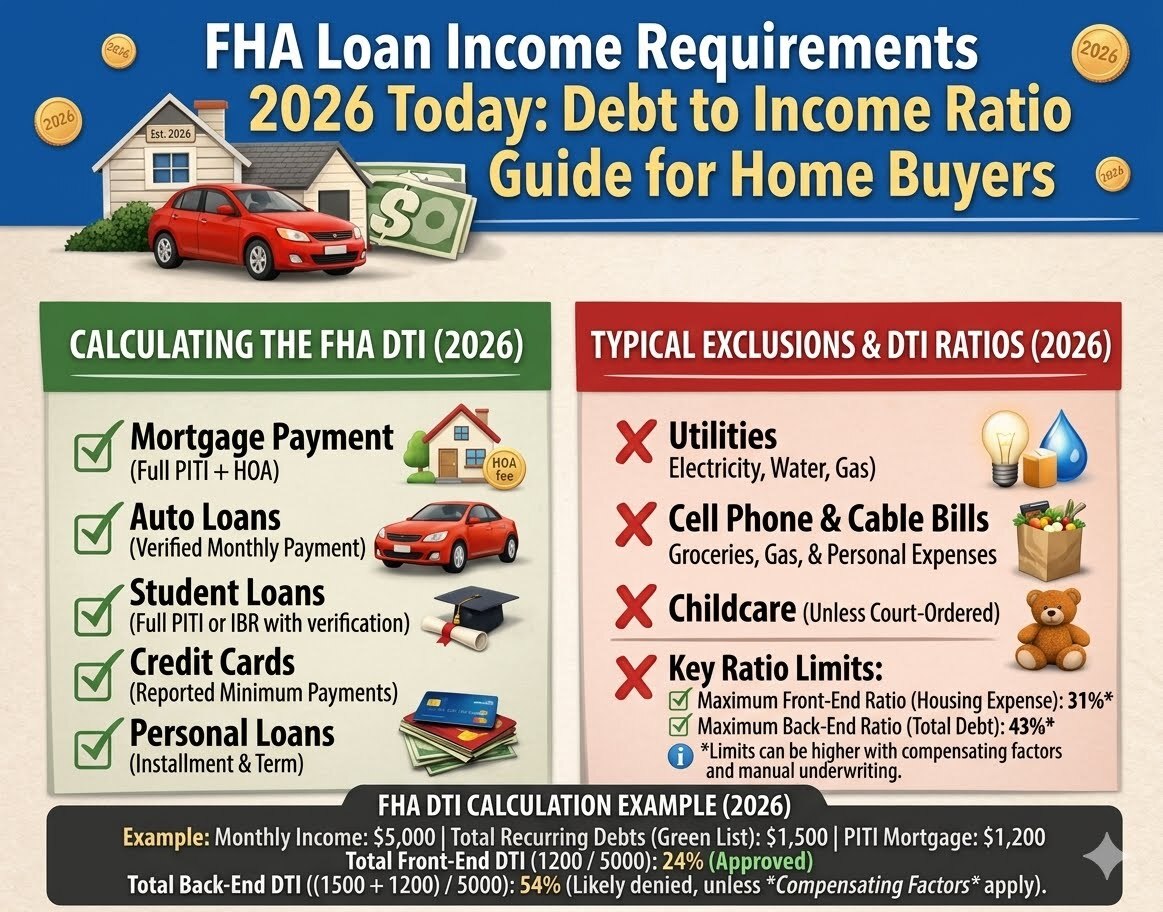

Learn FHA loan income requirements 2026, debt to income ratio limits, income rules, and approval tips. Find out how to qualify for an FHA home loan today.
FHA Loan Income Requirements 2026: Debt to Income Ratio Guide
Buying a home with an FHA loan is one of the easiest ways to become a homeowner. Many buyers choose FHA financing because it offers flexible credit and down payment requirements. However, your income and debt to income ratio play a major role in getting approved.
If you are planning to buy a home in 2026, understanding FHA loan income requirements can help you prepare before applying. This guide explains how lenders review your income, calculate your debt to income ratio, and what you can do to improve your chances of approval.
What Are FHA Loan Income Requirements?
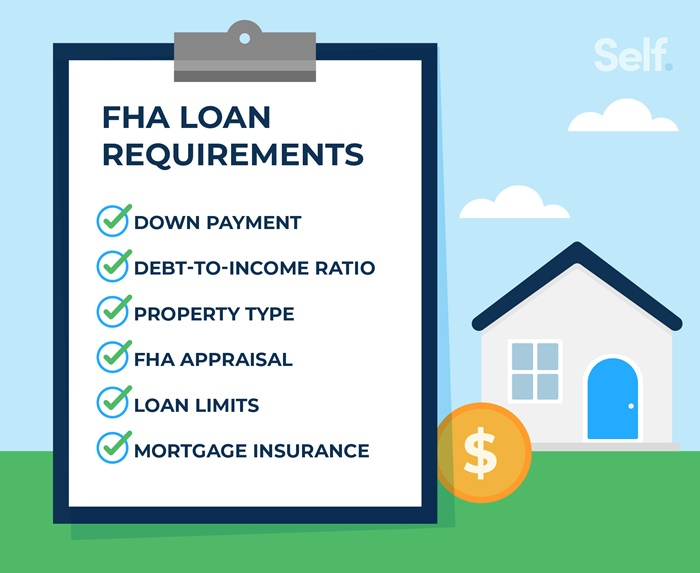
Unlike some loan programs, FHA loans do not require a minimum income amount. There is no specific salary you must earn to qualify.
Instead, lenders want to see that your income is:
- Stable
- Reliable
- Expected to continue
- Enough to cover your monthly mortgage payment and other debts
Your income must also be properly documented and verified.
Common Types of Income Accepted
Lenders may accept many income sources, including:
- Salary
- Hourly wages
- Overtime
- Bonuses
- Commission income
- Self employed income
- Retirement income
- Social Security benefits
- Disability income
- Military benefits
- Rental income
- Investment income
Each income type has documentation requirements, and some may require a history of at least two years.
What Is Debt to Income Ratio?
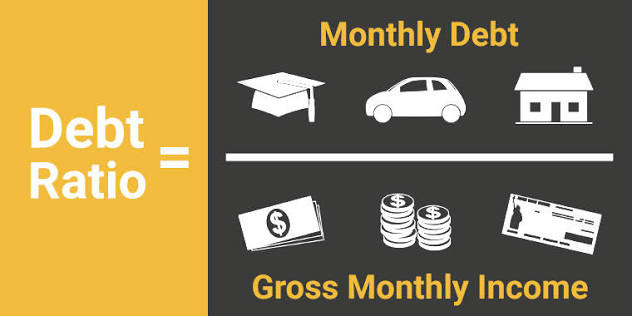
Debt to income ratio measures how much of your monthly income goes toward paying debts.
Lenders use this number to determine whether you can comfortably afford a mortgage payment.
Front End Ratio
This measures your housing expenses compared to your gross monthly income.
Housing expenses include:
- Mortgage payment
- Property taxes
- Homeowners insurance
- Mortgage insurance
- Homeowners association fees if applicable
Back End Ratio
This includes all monthly debt payments, such as:
- Mortgage payment
- Car loans
- Student loans
- Credit cards
- Personal loans
- Child support
- Other recurring obligations
The back end ratio is the most important number for FHA loan approval.
FHA Debt to Income Ratio Limits for 2026
Most FHA borrowers qualify with:
- Housing ratio around 31 percent
- Total debt ratio around 43 percent
However, many lenders approve borrowers with higher debt to income ratios if they have strong compensating factors.
In some situations, borrowers may qualify with a debt to income ratio approaching 50 percent or even higher if automated underwriting approves the application.
Possible compensating factors include:
- Higher credit score
- Larger down payment
- Cash savings
- Stable employment
- Low overall financial risk
How Lenders Calculate Your Income
Lenders calculate your gross monthly income before taxes.
For example:
Monthly salary: $6,000
Monthly debts:
- Car payment: $400
- Credit cards: $200
- Student loan: $300
- New mortgage payment: $1,500
Total monthly debt:
$2,400
Debt to income ratio:
$2,400 divided by $6,000 = 40 percent
Since 40 percent falls within common FHA guidelines, this borrower may qualify if other requirements are met.
Income Documentation Needed
When applying for an FHA loan, lenders usually request:
Employees
- Recent pay stubs
- W2 forms
- Tax returns if needed
- Bank statements
Self Employed Borrowers
- Personal tax returns
- Business tax returns
- Profit and loss statements
- Bank statements
Other Income Sources
Documentation depends on the type of income received. Award letters, benefit statements, lease agreements, or investment records may be required.
Tips to Improve Your Debt to Income Ratio
If your debt to income ratio is too high, there are several ways to improve it before applying.
Pay Down Existing Debt
Reducing credit card balances or paying off loans can lower your monthly obligations.
Increase Your Income
Additional verified income from a second job, bonuses, or other approved sources may improve your ratio.
Avoid New Debt
Do not finance a new vehicle or open new credit accounts before closing on your home loan.
Increase Your Down Payment
A larger down payment may reduce your monthly mortgage payment.
Improve Your Credit Score
A stronger credit profile may help you qualify even if your debt to income ratio is higher than average.
Can Self Employed Borrowers Qualify?
Yes. FHA loans are available for self employed borrowers.
Lenders generally review:
- Two years of tax returns
- Business income
- Business expenses
- Profit history
- Income stability
Keeping accurate financial records makes the approval process much smoother.
Common Reasons FHA Loans Are Denied
Even though FHA loans have flexible guidelines, applications may still be denied for reasons such as:
- Insufficient income
- High debt to income ratio
- Unstable employment
- Missing documentation
- Recent major credit problems
- Significant unpaid debts
Preparing your finances before applying can reduce these risks.
Why FHA Loans Remain Popular in 2026
FHA loans continue to help buyers achieve homeownership because they offer:
- Low down payment options
- Flexible credit requirements
- Competitive interest rates
- Higher debt to income flexibility
- Opportunities for many first time and repeat buyers
For many households, FHA financing remains one of the most accessible mortgage options available.
Conclusion
Understanding FHA loan income requirements for 2026 is an important step before buying a home. Lenders focus less on how much you earn and more on whether your income is stable enough to support your monthly obligations.
Your debt to income ratio is one of the biggest factors in the approval process. By reducing debt, maintaining stable employment, improving your credit, and providing complete documentation, you can increase your chances of qualifying for an FHA loan.
Speaking with an experienced mortgage professional before applying can also help you understand your options and prepare for a successful home purchase.
Frequently Asked Questions
Does FHA require a minimum income?
No. FHA does not require a minimum salary. Your income simply needs to be stable and sufficient to repay the mortgage.
What is the maximum debt to income ratio for an FHA loan?
Many borrowers qualify with a total debt ratio of about 43 percent. Some may qualify with higher ratios if they meet additional lending requirements.
Can overtime income count?
Yes. Overtime income may qualify if it has been earned consistently and is expected to continue.
Can self employed borrowers qualify for an FHA loan?
Yes. Self employed applicants can qualify by providing tax returns and other financial documentation.
Does FHA accept Social Security income?
Yes. Social Security benefits can usually be counted if properly documented.
Can I qualify with student loan debt?
Yes. Student loans are included in your debt to income ratio, but many borrowers still qualify.
How can I lower my debt to income ratio?
Pay off existing debt, increase verified income, avoid new loans, and reduce monthly expenses before applying.