
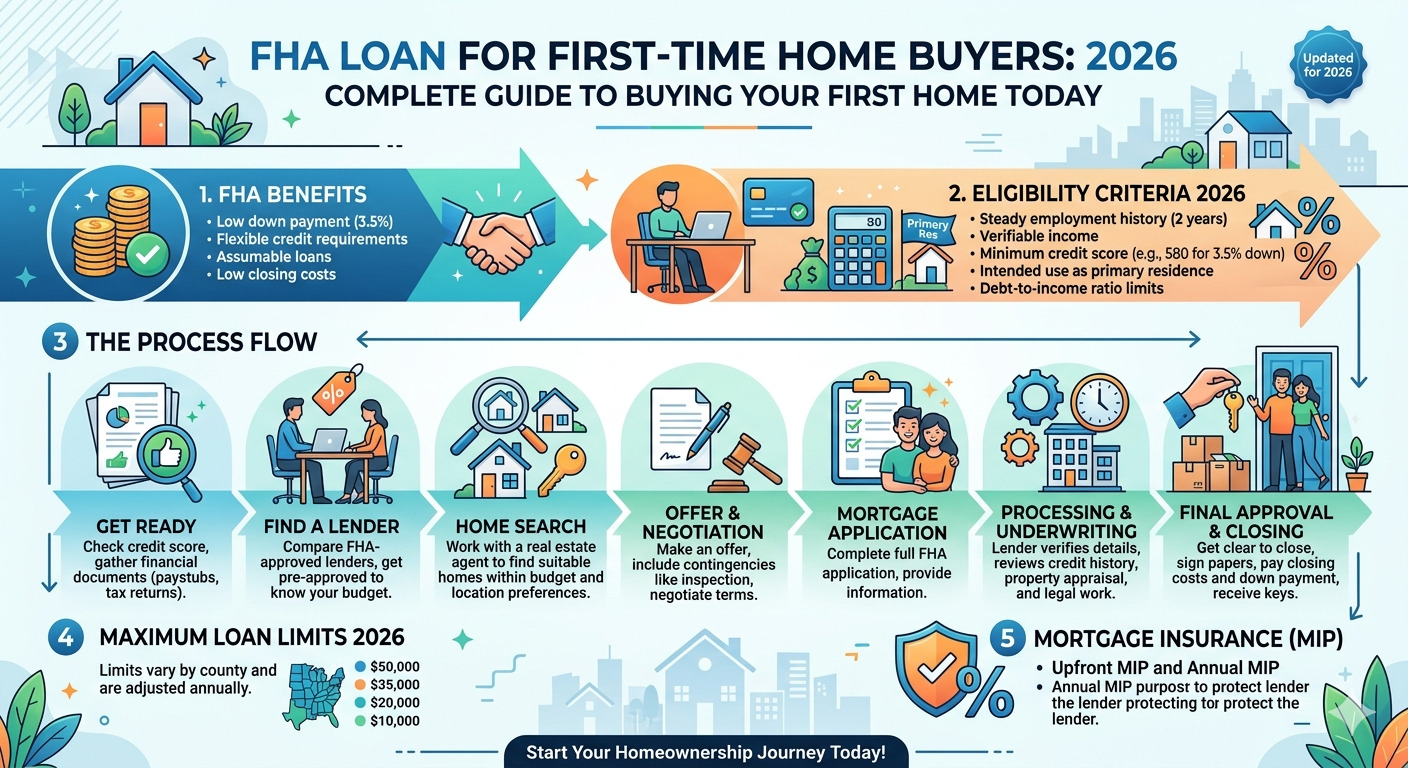

Learn everything about FHA loan for first time home buyers in 2026. Discover eligibility, down payment, credit score requirements, costs, and application tips.
FHA Loan for First Time Home Buyers 2026: Complete Guide

Buying your first home is an exciting milestone, but it can also feel overwhelming. Many people worry about saving for a large down payment or qualifying for a traditional mortgage. That is where an FHA loan can make homeownership more accessible.
If you are planning to buy your first home in 2026, understanding how an FHA loan works can help you make a smart financial decision. This guide explains everything you need to know, from eligibility requirements to application steps, so you can move forward with confidence.
What Is an FHA Loan?

An FHA loan is a mortgage insured by the Federal Housing Administration. It is designed to help buyers who may not qualify for conventional loans because of limited savings or lower credit scores.
Many first time home buyers choose FHA loans because they offer flexible qualification requirements and lower down payment options compared to many traditional mortgages.
Why First Time Home Buyers Choose FHA Loans
There are several reasons why FHA loans remain popular in 2026.
Lower Down Payment
One of the biggest advantages is the lower down payment requirement. Qualified borrowers may purchase a home with as little as 3.5 percent down, making it easier to become a homeowner sooner.
Flexible Credit Requirements
FHA loans are often available to borrowers with lower credit scores than many conventional mortgage programs. This gives more people the opportunity to qualify.
Competitive Interest Rates
Interest rates on FHA loans are often competitive, helping buyers manage monthly mortgage payments more comfortably.
Higher Approval Rates
Many lenders are more willing to approve FHA loans because they are backed by the government, reducing lender risk.
FHA Loan Requirements for 2026
Before applying, it is important to understand the basic eligibility requirements.
Credit Score
Most lenders prefer a credit score of at least 580 to qualify for the minimum down payment. Some lenders may approve lower scores with a larger down payment.
Down Payment
Qualified borrowers may pay as little as 3.5 percent if they meet the credit requirements.
Stable Income
Lenders want to see reliable income and steady employment to ensure you can afford monthly mortgage payments.
Debt to Income Ratio
Your monthly debt payments should remain within acceptable limits compared to your monthly income.
Primary Residence
The home must be your primary residence. FHA loans are not intended for vacation homes or investment properties.
Benefits of FHA Loans in 2026
Choosing an FHA loan offers several advantages for first time buyers.
Easier Qualification
Many borrowers who cannot qualify for conventional financing may still qualify for an FHA loan.
Lower Cash Needed at Closing
The lower down payment means you may need less money upfront.
Gift Funds Allowed
Family members may help with your down payment through approved gift funds, making homeownership more achievable.
Refinancing Opportunities
FHA borrowers may also have refinancing options in the future if interest rates improve.
Potential Drawbacks
Although FHA loans offer many benefits, there are a few disadvantages to consider.
Mortgage Insurance
FHA loans require mortgage insurance premiums. These costs increase your monthly payment and may continue for many years.
Loan Limits
There are maximum loan amounts based on your location. Buyers in expensive housing markets should review local loan limits before shopping.
Property Standards
Homes financed with FHA loans must meet minimum property standards during the appraisal process.
How to Apply for an FHA Loan
The application process is straightforward when you prepare in advance.
Check Your Credit
Review your credit report and correct any errors before applying.
Save for Your Down Payment
Even though FHA loans require less money upfront, having additional savings for closing costs is helpful.
Gather Your Documents
Most lenders request:
- Proof of income
- Tax returns
- Bank statements
- Employment information
- Government issued identification
Compare Multiple Lenders
Different lenders may offer different interest rates and closing costs. Comparing several offers can save money over the life of your loan.
Get Pre Approval
A mortgage pre approval helps you understand your budget and shows sellers you are a serious buyer.
Find Your Home
Work with a real estate professional to find a home that meets FHA property requirements.
Tips for First Time Home Buyers
Buying your first home becomes easier with careful planning.
Improve Your Credit Score
Pay bills on time and reduce outstanding debt before applying.
Avoid Large Purchases
Do not open new credit accounts or finance expensive items before closing on your home.
Build an Emergency Fund
Unexpected home expenses can happen. A savings account provides financial security after moving in.
Understand Your Budget
Focus on what you can comfortably afford instead of borrowing the maximum amount available.
FHA Loan Versus Conventional Loan
Many buyers compare FHA loans with conventional mortgages.
An FHA loan is generally easier to qualify for and requires a lower down payment. Conventional loans may offer lower long term costs for borrowers with excellent credit and larger down payments.
If your credit is still improving or your savings are limited, an FHA loan may be the better choice. If you have strong credit and more money saved, a conventional loan may provide additional flexibility.
Common Mistakes to Avoid
Many first time buyers make avoidable mistakes during the mortgage process.
- Skipping mortgage pre approval
- Ignoring closing costs
- Making large purchases before closing
- Applying with only one lender
- Buying more house than your budget allows
Avoiding these mistakes can make your home buying experience much smoother.
Conclusion
An FHA loan remains one of the best financing options for first time home buyers in 2026. With lower down payment requirements, flexible credit guidelines, and competitive interest rates, it helps many families achieve the dream of homeownership.
Before choosing a mortgage, compare several lenders, review all loan costs, and understand your monthly payment. Careful planning today can help you enjoy a successful home purchase and long term financial stability.
Frequently Asked Questions
Is an FHA loan only for first time home buyers?
No. FHA loans are available to both first time and repeat home buyers as long as they meet the eligibility requirements.
What credit score do I need for an FHA loan?
Many lenders accept a credit score of 580 for the minimum down payment, although some may have different requirements.
How much down payment is required?
Qualified borrowers may purchase a home with as little as 3.5 percent down.
Can I use gift money for my down payment?
Yes. Approved gift funds from family members or eligible sources may be used for your down payment.
Do FHA loans require mortgage insurance?
Yes. FHA loans require mortgage insurance premiums, which increase the total cost of the loan.
Can I refinance an FHA loan later?
Yes. Many borrowers refinance when interest rates improve or their financial situation changes.
Can I buy any home with an FHA loan?
The property must meet FHA appraisal and safety standards, and it must be your primary residence.
How do I improve my chances of approval?
Maintain a steady income, improve your credit score, reduce debt, save for closing costs, and obtain mortgage pre approval before shopping for a home.