
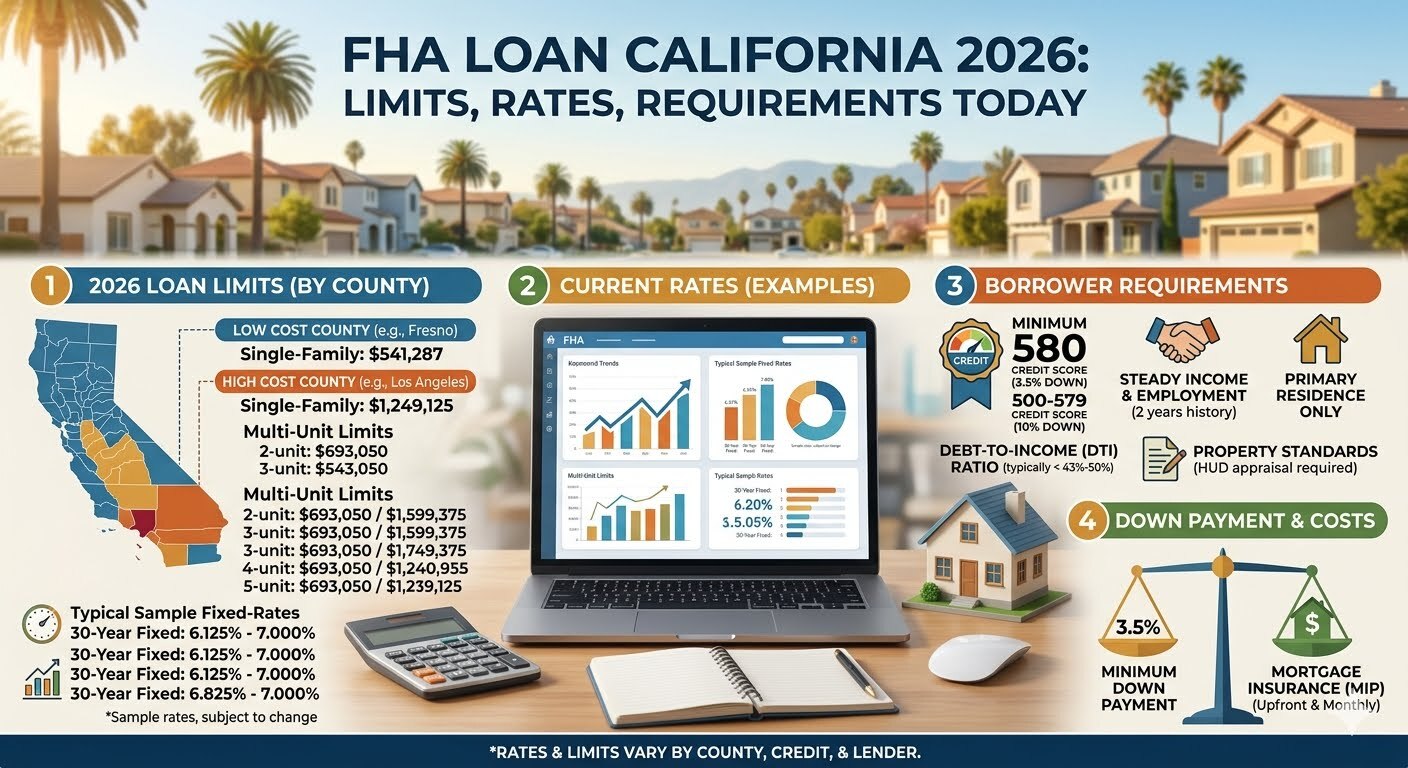

Learn everything about FHA Loan in California 2026, including loan limits, interest rates, eligibility requirements, down payment rules, and how to qualify.
FHA Loan in California 2026: Complete Guide to Limits, Rates and Requirements

Buying a home in California can feel challenging because of rising property prices and changing mortgage rates. Fortunately, an FHA loan in California remains one of the most popular financing options for first time buyers and borrowers with limited savings.
In 2026, FHA loans continue to offer flexible qualification requirements, lower down payments, and competitive mortgage rates. Whether you are purchasing your first home or returning to the housing market, understanding FHA loan limits, rates, and requirements can help you make a smart decision.
This guide covers everything you need to know about FHA loans in California today.
What Is an FHA Loan?

An FHA loan is a mortgage insured by the Federal Housing Administration. This government backed program helps borrowers qualify for home financing with less strict credit and income requirements compared to many conventional loans.
Key benefits include:
- Low down payment options
- Flexible credit score requirements
- Competitive interest rates
- Higher debt to income allowances
- Assistance for first time home buyers
Because California home prices are often higher than the national average, FHA loans remain an attractive choice for many buyers.
FHA Loan Limits in California 2026
California FHA loan limits determine the maximum amount you can borrow using an FHA insured mortgage.
Loan limits vary by county because home values differ across California.
Low Cost Counties
In areas with lower housing prices, FHA loan limits are generally lower. These counties are designed to reflect local market values.
High Cost Counties
Counties such as Los Angeles, Orange County, San Francisco, San Mateo, Santa Clara, and Alameda typically receive higher FHA loan limits because home prices are significantly above the national average.
Before applying, borrowers should check the current FHA loan limit for their specific county to determine their borrowing power.
Current FHA Mortgage Rates in California
FHA mortgage rates in California can vary based on:
- Credit score
- Loan amount
- Down payment
- Property type
- Market conditions
- Lender pricing
Factors That Affect FHA Rates
Credit History
Borrowers with stronger credit profiles often receive lower interest rates.
Loan Term
Most FHA borrowers choose a 30 year fixed rate mortgage, though shorter terms may offer lower rates.
Market Conditions
Mortgage rates change daily based on economic conditions and investor demand.
How to Get the Best FHA Rate
- Compare multiple lenders
- Improve your credit score
- Reduce existing debt
- Save for a larger down payment
- Lock your rate when favorable
Shopping around can potentially save thousands of dollars over the life of your loan.
FHA Loan Requirements in California
Understanding FHA loan requirements is essential before applying.
Minimum Credit Score
Most borrowers need a credit score of at least 580 to qualify for the minimum down payment option.
Some lenders may approve lower scores, although additional requirements often apply.
Down Payment Requirements
One of the biggest advantages of an FHA loan is the low down payment requirement.
3.5 Percent Down
Borrowers with qualifying credit scores can purchase a home with as little as 3.5 percent down.
Higher Down Payment for Lower Scores
Applicants with lower credit scores may need a larger down payment.
Debt to Income Ratio
Lenders evaluate your debt to income ratio to determine affordability.
This ratio compares your monthly debt obligations to your gross monthly income.
Lower ratios generally improve approval chances.
Employment and Income Verification
Borrowers must provide documentation proving stable income and employment history.
Common documents include:
- Pay stubs
- Tax returns
- Bank statements
- Employment verification
Property Requirements
The home must meet FHA property standards and pass an FHA appraisal.
These standards help ensure the property is safe and habitable.
Who Should Consider an FHA Loan?
An FHA loan may be a good option if you:
- Are a first time home buyer
- Have limited savings
- Have average credit
- Need flexible qualification guidelines
- Want a low down payment mortgage
Many California buyers choose FHA financing because it provides easier access to homeownership.
FHA Loan vs Conventional Loan
Choosing between FHA and conventional financing depends on your financial situation.
FHA Loan Advantages
- Lower down payment
- Easier credit qualification
- Flexible debt requirements
- Helpful for first time buyers
Conventional Loan Advantages
- Potentially lower long term costs
- No permanent mortgage insurance in many cases
- More flexibility for higher credit borrowers
Comparing both options with a mortgage guider hub professional can help identify the best fit.
Steps to Apply for an FHA Loan in California
Applying for an FHA mortgage is straightforward when you prepare in advance.
Step 1: Check Your Credit
Review your credit report and address any errors.
Step 2: Calculate Your Budget
Determine how much home you can comfortably afford.
Step 3: Gather Documents
Prepare income records, tax returns, and bank statements.
Step 4: Compare Lenders
Request quotes from several lenders to find competitive rates and fees.
Step 5: Get Preapproved
A preapproval letter shows sellers that you are a serious buyer.
Step 6: Find Your Home
Work with a real estate agent to identify properties that fit your budget.
Step 7: Complete the Loan Process
Submit required documents, complete the appraisal, and move toward closing.
Tips for FHA Loan Approval in 2026
To improve your approval chances:
- Pay bills on time
- Reduce credit card balances
- Avoid opening new credit accounts
- Save additional funds for closing costs
- Maintain stable employment
Small improvements can significantly strengthen your mortgage application.
Frequently Asked Questions
What is the minimum down payment for an FHA loan in California?
Most qualified borrowers can purchase a home with a down payment as low as 3.5 percent.
Can first time buyers use an FHA loan?
Yes. FHA loans are one of the most popular programs for first time home buyers.
Are FHA loans only for low income borrowers?
No. FHA loans are available to borrowers across many income levels who meet lender guidelines.
Do FHA loans require mortgage insurance?
Yes. FHA loans generally include mortgage insurance premiums that help protect lenders.
Can I refinance an FHA loan later?
Yes. Many borrowers refinance when interest rates improve or when they build additional home equity.
Is there a maximum FHA loan amount?
Yes. FHA loan limits vary by county and are updated periodically.
Can I buy a multi unit property with an FHA loan?
Yes. Eligible borrowers may purchase certain multi unit properties while occupying one unit as a primary residence.
Conclusion
An FHA loan in California 2026 remains a powerful financing solution for buyers seeking affordable homeownership. With low down payment requirements, flexible credit standards, and competitive mortgage rates, FHA financing continues to help thousands of Californians achieve their homeownership goals.
Before applying, compare lenders, review county loan limits, and understand all qualification requirements. Taking the time to prepare can help you secure better terms and move confidently toward purchasing your dream home.







One Response
Your discussion of FHA Loan in California 2026: Latest Limits, Rates is useful because it pushes readers to look beyond a single headline number. First-time buyers often focus on the down payment first, but taxes, insurance, mortgage insurance, and closing cash can change the practical comparison. A few side-by-side scenarios can make the tradeoffs clearer. Do you think buyers should compare FHA and conventional assumptions before they commit to one route?